
A Taste of Tradition: Local Food Near Rila Monastery
Setting the Culinary Scene Among the Rila Pines
Back when I lived in London, breakfast was a hurried affair with a paper cup of tepid black coffee on a crowded train. Moving to Bulgaria shifted my morning ritual entirely. Here, high in the Rila Mountains where the air tastes of pine resin and cold granite, breakfast is slow, steam-filled, and deeply connected to centuries of monastic tradition. When you step through the stone archways of Rila Monastery, the architectural grandeur takes your breath away, but it is the aroma drifting from outside the north gates that eventually guides your feet.
The culinary landscape surrounding Bulgaria’s most revered sanctuary is surprisingly focused. You will not find endless strips of flashy tourist traps or international fast-food chains tucked away in this mountain gorge. Instead, the eateries lining the Rilska River draw their inspiration from the immediate environment. Cold mountain streams provide fresh trout, nearby pastureland yields rich sheep milk, and traditional family recipes dictate how a pot of beans simmer over an open fire. Eating here is an integral part of understanding how monks, pilgrims, and highlanders have sustained themselves in these isolated valleys for generations.
Whether you arrive on an organized day trip from Sofia or wander up the mountain on a longer travel itinerary across Bulgaria, taking time for a proper local meal is essential. The food is rustic, heavy, and intensely satisfying, designed to ward off the alpine chill and fuel long walks along the forest trails.
The Holy Grail of Street Eats: The Legend of the Monastery Bakery
If you ask any Bulgarian what you ought to eat first upon reaching the complex, they will point you straight to Manastirska Pekarna, the monastery bakery. Located in an unassuming stone building just outside the north exit near teh main parking area (Address: 107-8, 2643 Rilski Manastir, Kyustendil Province), this modest establishment produces what many consider a national treasure. You can easily spot it by the quiet queue of people standing under the overhang, wrapped in morning coats, patiently waiting for the wooden shutter to slide open around 9:30 AM.
The bakery keeps things remarkably simple. There are no fancy display cases or long print menus. Instead, giant trays of golden fried dough emerge directly from the back room, dusted with powdered sugar and piping hot. This is a stop every visitor makes, whether they are visiting the main church to marvel at the sacred frescoes and history or heading out to explore the nearby nature trails.
Mastering the Art of the Mekitsa: Texture, Tradition, and Powdered Sugar
The star of the bakery is undoubtedly the mekitsa (plural: mekitsi), a traditional Bulgarian deep-fried flatbread made from a simple dough of wheat flour, warm water, yeast, and thick local yogurt. The yogurt gives the dough a subtle tangy flavor and reacts with the leavening agent to create large, airy bubbles inside while the exterior fries to a crisp, deep golden hue.
Holding a fresh mekitsa wrapped in greaseproof paper while the mountain fog lifts off the pine trees is one of those simple pleasures that stays with you long after you leave. The dough has a delightfully chewy pull, airy on the inside without feeling overly oily. A single piece costs around 1.50 to 2 BGN (Bulgarian Lev), making it one of the most affordable culinary highlights in the entire region. Many locals enjoy theirs dusted liberally with icing sugar, while others pair it with a slice of salty white cheese or a spoonful of wild berry jam purchased from the market stalls nearby.
Alongside the mekitsi, the bakery bakes fresh loaves of pitka (traditional round hearth bread). These thick, crusty loaves carry a tight crumb and a distinctive yeast aroma that pairs perfectly with mountain soups. If you plan to hike past the complex toward St. Ivan’s Cave, grabbing a warm loaf of pitka from the bakery is a practical way to keep your energy up on the trail.
Local Eats and Pricing Guide
| Dish / Item | Bulgarian Name | Description | Approximate Price (BGN) |
|---|---|---|---|
| Monastery Mekitsa | Мекица | Deep-fried yogurt dough served hot, dusted with powdered sugar. | 1.50 – 2.00 BGN |
| Mountain Trout | Пъстърва | Fresh river trout, pan-fried or grilled whole with lemon and garlic. | 14.00 – 22.00 BGN |
| Monastery Bean Soup | Боб Чорба | Rich white bean soup cooked with herbs, wild mint, and tomatoes. | 5.00 – 8.00 BGN |
| Shopska Salad | Шопска Салата | Diced tomatoes, cucumbers, peppers, topped with grated sirene cheese. | 7.00 – 11.00 BGN |
| Clay-Pot Kavarma | Каварма | Slow-cooked pork or chicken stew cooked in a sealed terracotta dish. | 14.00 – 20.00 BGN |
| Wild Berry Jam | Сладко от горски плодове | Handcrafted jam from wild raspberries, blueberries, or strawberries. | 6.00 – 10.00 BGN per jar |
Riverside Dining: Taverns and Eateries Just Outside the Gates
When you require a full sit-down lunch, step away from the immediate perimeter walls and walk down toward the banks of the Rilska River. Here, shielded beneath a thick canopy of ancient beech trees, you will find several traditional Bulgarian taverns, known locally as a mehana. These eateries feature rustic wooden furniture, exposed stone fireplaces, and outdoor terraces where the rushing mountain water provides a soothing backdrop to your meal.
One of the most notable spots along this stretch is Restaurant Valyavitsa (Ресторант Валявица). Situated right by the flowing water, it has a tranquil forest setting and extensive menus illustrated with traditional Bulgarian mountain fare. Sitting on their timber deck on a warm afternoon while listening to the river sound is a magnificent experience. Other solid options nearby include Tavern “Magic of Rila” and Restaurant Gradina, both of which serve classic Bulgarian comfort food in generous portions.
“The trick to dining near the monastry is coming right around noon before the large tour buses finish their central courtyard walks. Securing a table by the river early guarantees a quiet meal with fresh trout pulled from the water just hours prior.”
— Julian Thorne
Fresh Mountain Trout: The Undisputed King of Local Menus
If there is one dish that defines the culinary identity of the Rila Valley, it is fresh river trout, listed on menus as palyastorska pastarva or simply pastarva. The rushing, mineral-rich streams flowing down from the high alpine peaks create ideal conditions for trout, and local fish farms operating along the river supply these mountain taverns daily.
Preparation techniques are kept minimal to respect the quality of the fish. Most rila monastery restaurant kitchens prepare the trout in one of two ways: grilled whole over hot charcoal embers or lightly dusted with flour and pan-fried in butter until the skin becomes exceptionally crisp. It arrives at your table accompanied simply by a lemon wedge, fresh parsley, and occasionally a side of roasted potatoes or garlic dip. The flesh is tender, sweet, and flaky, carrying none of the muddy taste sometimes associated with farmed freshwater fish.
Warming the Soul: Traditional Bulgarian Bob Chorba
Mountain weather in the Rila Range can shift rapidly. Even in midsummer, an afternoon shower can drop temperatures quickly, making a bowl of piping hot soup highly appealing. The standard here is bob chorba, a thick white bean soup that holds a sacred place in Bulgarian culinary history.
Monasteries across Bulgaria have refined bean soup recipes over centuries, as dried beans were easy to store through long alpine winters and adhered to strict Orthodox fasting rules during Lent. Rila’s variation relies on large white beans simmered slowly with diced carrots, onions, sweet red peppers, and tomatoes. The crucial ingredient that gives the soup its distinct regional identity is dried spearmint (djodjen) mixed with mountain savory (chubritsa). The result is an aromatic, soothing broth with a deep herbal note that warms you from the inside out.
Crisp Refreshments: Shopska Salad and Local Dairy Delights
No meal in Bulgaria starts without a salad, regardless of the season or location. The classic choice is Shopska salata, a colorful dish composed of thick-cut ripe tomatoes, crisp cucumbers, raw or roasted sweet peppers, and red onions. The salad is dressed simply with sunflower oil and red wine vinegar, then covered in a heavy snow-like mound of finely grated sirene, the salted white brine cheese that is a staple of Bulgarian cuisine.
Beyond cheese, the mountain pastures around Rila produce exceptionally thick yogurt made from sheep or buffalo milk. You can order thick strained yogurt served in clay bowls topped with spoonfuls of wild strawberry or blueberry preserve. The balance between the tart, rich yogurt and the intensely sweet forest berry jam creates an unforgettable dessert that clean-tasting and refreshing.
Hearty Mains: Grilled Meats and Clay-Pot Specials
For diners looking for something meatier, the local taverns offer an array of Bulgarian charcoal-grilled classics, collective known as skara. Popular options include kyufte (spiced ground meat patties mixed with onions and cumin) and kebapche (elongated grilled meat rolls). These are usually served alongside a dollop of lyutenitsa, a savory relish made from roasted red peppers, tomatoes, garlic, and eggplant.
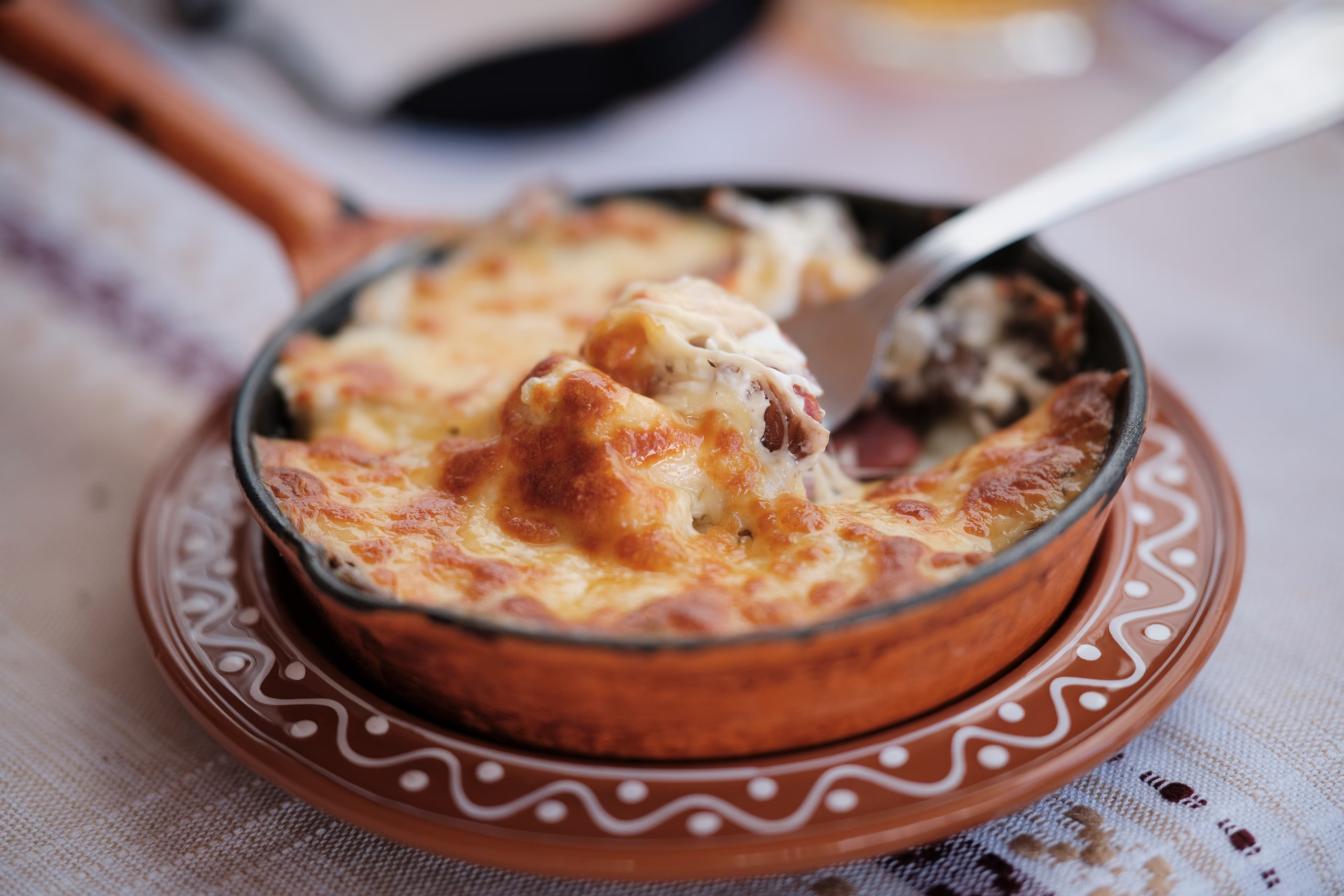
If you prefer a slow-cooked dish, look for kavarma on the menu. This traditional stew features chunks of pork or chicken braised with leeks, onions, mushrooms, and wine, finished in an earthenware terracotta vessel called a gyuvetch. The heavy clay pot retains heat exceptionally well, allowing the flavors to meld together into a rich, savory sauce that demands to be soaked up with crusty bread.
Vegetarian Dining Options
Bulgarian Orthodox tradition includes extensive fasting periods throughout the year, meaning local menus are remarkably friendly to vegetarians. Dishes like bob chorba, sirene po shopski (baked cheese in a clay pot with tomatoes and eggs), pan-fried zucchini with garlic yogurt, and fresh salads provide rich, meat-free meals without any hassle.
Local Beverage Pairings
Pair your meal with traditional Bulgarian beverages. Try ayran, a cold yogurt drink lightly salted to restore electrolytes after hiking. For something warm, order herbal tea brewed from wild mountain herbs like Mursalika tea. If you enjoy spirits, a small glass of aged grape or plum rakia makes for a traditional pre-meal aperitif.
The Golden Rule of Cash: Why Plastic Won’t Save You in the Mountains
One critical piece of practical advice for anyone visiting the area is to carry sufficient hard currency in Bulgarian Lev (BGN). The remote location of the Rila Nature Park means cellular and internet connectivity can be spotty, and payment terminals are rare outside major city centers.
The monastery bakery, small souvenir stalls, and roadside market vendors operate strictly on a cash-only basis. While a few larger riverside restaurants might occasionally accept credit cards when their terminal works, relying on electronic payments in this gorge is a risky gamble. ATMs in the immediate vicinity are either nonexistent or frequently out of service due to network drops. Stop at an ATM in Sofia or Blagoevgrad before driving up the mountain to ensure you have enough paper money for lunch, pastries, entrance fees to the museums, and local souvenirs.
For more detailed operational details regarding parking, attire, and complex facilities, review our guide to monastery visitor rules and dress codes before heading out.
Stalls and Souvenirs: Local Honey, Forest Berries, and Herbal Teas
Line up along the pedestrian pathways outside the main entrance gates, a small open-air market operates daily. Local vendors from nearby villages set up wooden tables packed with jarred goods that capture the bounty of the Rila forest.
- Wild Forest Honey (Gorski Med): Collected from hives placed deep in the mountain pine forests, this honey is dark, amber-hued, and rich in mineral notes. Vendors often sell honey infused with walnuts or pine cones.
- Wild Berry Jams: Jars of homemade jam crafted from hand-picked wild strawberries, blueberries, raspberries, and blackberries offer an authentic taste of the mountain.
- Mountain Herbal Teas: Bundles of dried mountain herbs are sold for a few Lev. Look out for Mursalski tea (Sideritis scardica), a prized Balkan herb known for its smooth flavor and health benefits.
- Handcrafted Wooden Ware: Carved wooden spoons, honey dippers, and small spice boxes painted with traditional Bulgarian motifs make practical gifts to bring back home.
Pacing Your Meal: Balancing Lunch Logistics with Tour Itineraries
Managing your time wisely allows you to enjoy both the cultural sights and the local cuisine without feeling rushed. According to official tourism guidelines from the Bulgaria Travel Portal, most visitors allocate between two to three hours for the entire complex. However, if you intend to sit down for a leisurely river trout lunch at a mehana, you should factor in at least an additional hour and a half.
If you are traveling on an organized trip or coordinating public transit via our transportation and route options guide, consider securing your mekitsa at the bakery first thing upon arrival. Eat your pastry while exploring the exterior archways and central courtyard when the sunlight hits the painted frescoes. Save the full sit-down lunch at a riverside tavern for early afternoon, after you have toured the main church and history museum housing Raphael’s Cross. This sequence lets you beat the peak lunch crowds and relax before your afternoon departure back down the mountain pass.
Carrying the Taste of Rila Back Down to the Lowlands
As the sun begins to dip behind the sharp granite ridges of the Rila Range, casting long shadows across the timber balconies of the monastery, the cool air descends quickly over the valley. Leaving the sanctuary to head back toward Sofia or on to other destinations across Bulgaria, the memories that linger are not just of golden halo frescoes or soaring bell towers. They are equally tied to the rustic flavors of the mountain, the warmth of fresh dough dusted with sugar, the earthy aroma of bean soup simmered with wild mint, and the clean taste of river trout caught in glacial streams.
Taking time to sit by the river and enjoy a traditional meal is not merely a break in your sightseeing schedule. It is a genuine connection to the highland culture that has protected and sustained this sacred sanctuary for over a thousand years, offering a taste of Bulgarian heritage that remains as authentic today as it was centuries ago.