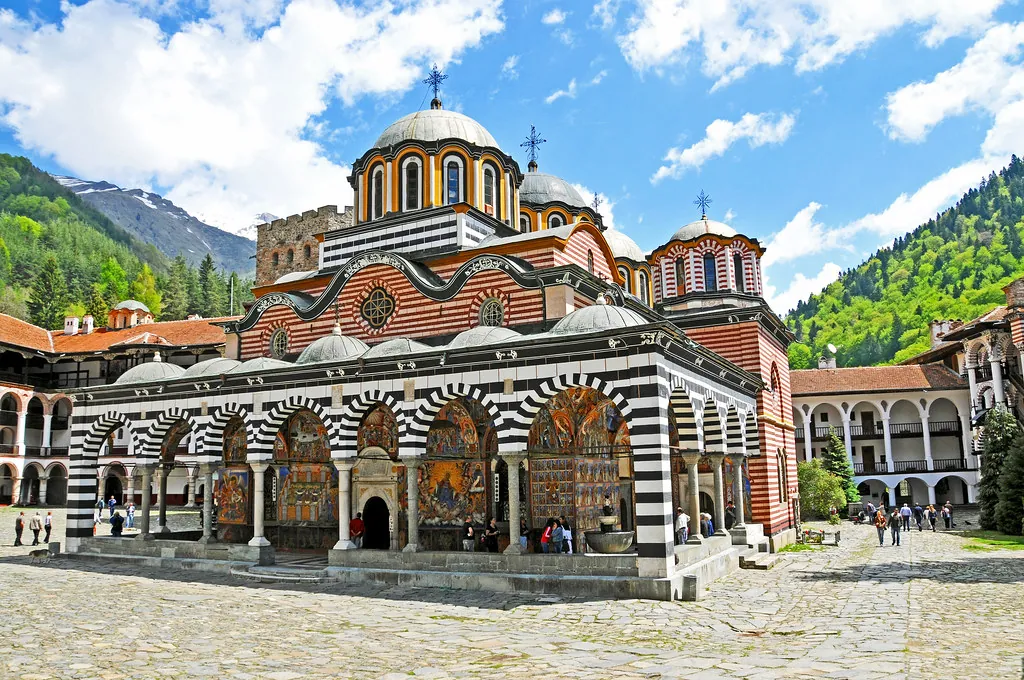
Standing in the central courtyard of Rila Monastery during the early morning hours, before the tour coaches arrive from Sofia, offers a rare moment of stillness. High in the Rila Mountains at 1,147 metres above sea level, the air carries a sharp pine resin scent that contrasts with the warm aroma of fresh espresso from my travel flask. The sheer granite cliffs of the valley rise sharply around the monastic fortress, framing an architectural complex that has preserved Bulgarian culture through centuries of foreign rule. To understand why this sanctuary draws visitors from around the world, one must examine its origins, its dramatic rebuilds, and the extraordinary visual gospel painted across its walls.
The Hermit in the Wilderness: Saint Ivan of Rila and 10th-Century Origins
The origins of the monastery trace back to the first half of the 10th century, around 927 AD, when an ascetic monk named Ivan chose the wilderness of the Rilska River valley for his life of prayer. Saint Ivan of Rila (876–946 AD) lived in a cramped rock cave roughly four kilometres away from where the present complex stands. He shunned material comfort, living on wild herbs and river water, yet his reputation for holiness and spiritual healing spread across the First Bulgarian Empire. Disciples gathered around his hermit cell, building wooden huts and a small stone chapel, establishing the foundation of what would become the monastery of saint ivan of rila.
When Tsar Peter I travelled into the mountains to seek Saint Ivan’s counsel, the hermit famously declined to meet the monarch in person to avoid worldly vanity, offering instead a written letter of spiritual guidance. This deep monastic retreat laid the spiritual bedrock of Bulgarian Eastern Orthodoxy. To gain a deeper understanding of how this monastic movement influenced the nation’s spiritual landscape, read our guide on Bulgaria’s Orthodox faith and history. Today, visitors can still trek through the beech forest to Saint Ivan’s original cave on a popular day hike, which many travelers combine with a guided Rila Monastery and St. Ivan Cave trip.
Medieval Flourishing and Survival Under Feudal Lords (Hrelyo’s Tower)
During the 14th century, the monastery shifted from a remote mountain hermit cell into a major feudal center. Regional lords showered the brotherhood with land grants, privileges, and funding. The local feudal ruler Stefan Hrelja Dragovol, known simply as Lord Hrelio, recognized the site’s strategic and spiritual importance. In 1334–1335, Hrelio commissioned a massive defensive stone tower in the middle of the courtyard to protect the monks against mountain bandits and regional conflicts during the Second Bulgarian Kingdom.
Standing 23 metres tall with stone walls nearly three metres thick at the base, Hrelyo’s Tower remains the oldest surviving original structure inside the complex today. The top floor houses the tiny Chapel of the Transfiguration, decorated with original 14th-century murals that survived subsequent fires and military raids. Standing near its base, you get a palpable sense of the fortification’s defensive purpose during an unpredictable medieval era.
Dark Ages and Resilience: The Ottoman Period and Cultural Preservation
The conquest of the Bulgarian Realm by the Ottoman Empire in the late 14th century brought immense hardship to monastic communities. Repeated raids led to partial destruction, loss of property, and dispersal of the monastic brotherhood. By the late 15th century, however, a slow restoration began. Monks secured special Ottoman decrees (*firmans*) granting the monastery protected status, land rights, and tax exemptions due to its revered reputation among local populations.
Throughout these dark centuries, the brethren maintained secret scriptoria inside their stone cells. Scribes meticulously copied Old Church Slavonic manuscripts, translated Byzantine theological texts, and preserved centuries of Bulgarian literature. The monastery acted as an ark, keeping written traditions and historical memory alive when formal Bulgarian statehood had ceased to exist. Monks travelled across the Balkans and into Tsarist Russia to collect donations, bring back religious books, and maintain links with the wider Orthodox realm.
Phoenix from the Ashes: The 1833 Fire and the Bulgarian National Revival
Disaster struck on a freezing winter night in January 1833, when a accidental fire broke out in the wooden residential wings. Fueled by pine beams and dry winter winds, flames consumed almost the entire monastery complex, leaving only Hrelyo’s medieval stone tower standing among ash and rubble. News of the fire swept through towns and villages during a period of rising national consciousness known as the *Vazrazhdane* (Bulgarian National Revival).
What followed was an unprecedented nation-wide effort. Master builders, stonecutters, woodcarvers, and painters gathered in the Rila valley, funded by thousands of micro-donations from guild merchants and rural peasants across the country. Master Alexi Rilets designed and directed the ambitious reconstruction, creating a four-story residential fortress capable of withstanding harsh mountain winters while projecting an image of artistic renewal. This massive effort transformed the site into a national symbol of cultural independence, earning its recognition as a UNESCO World Heritage Site in 1983.
Architectural Masterpiece: The Layout, Courtyards, and Residential Wings
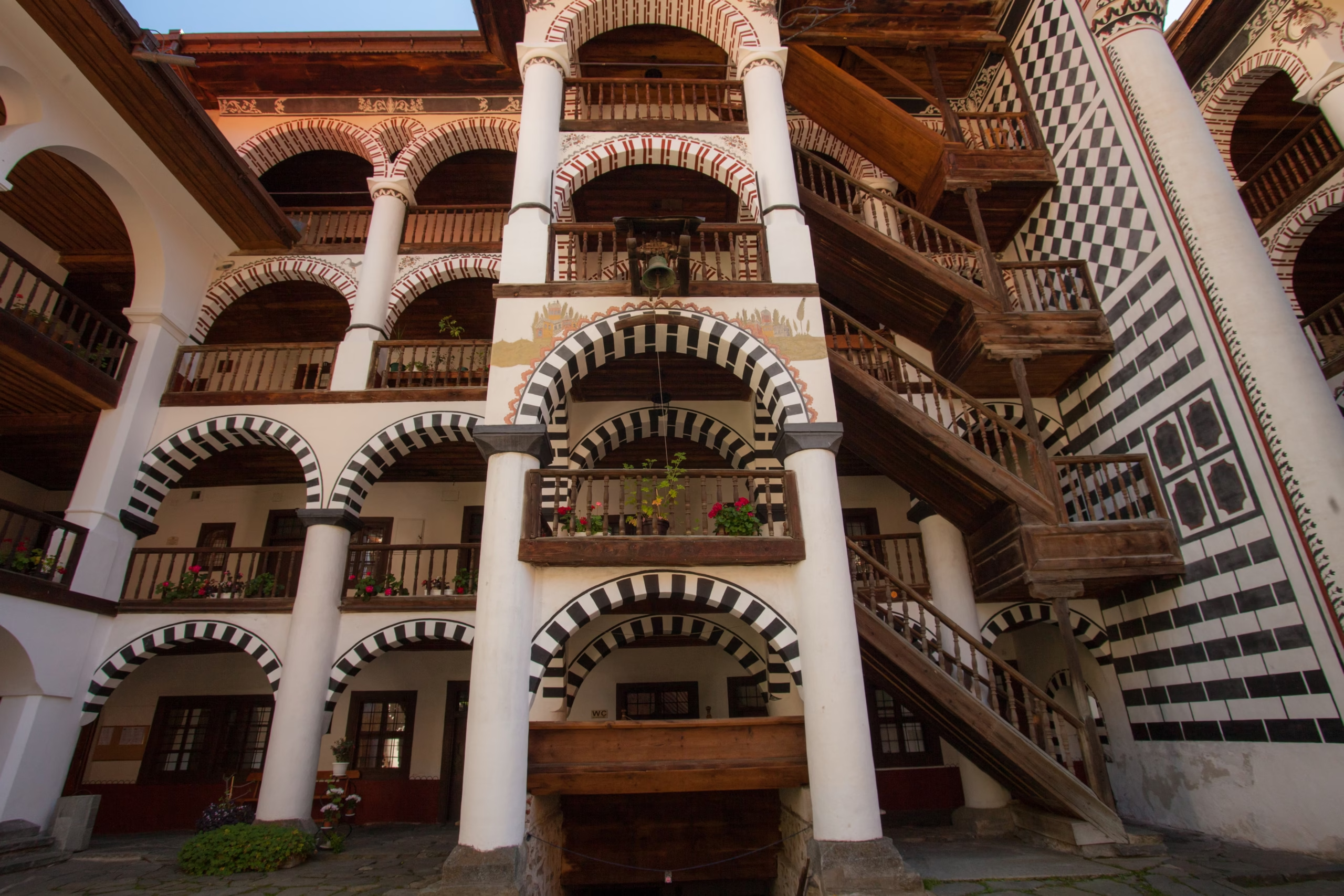
The architectural geometry of Rila Monastery is striking in its duality. From the exterior, the high, windowless stone walls present an imposing, almost stern medieval fortress designed to repel invaders. Step through the heavy oak gates of the Dupnitsa or Samokov entrances, however, and you enter a sprawling 320-square-metre cobblestone courtyard surrounded by three tiers of open arcades and black-and-white striped geometric arches.
| Architectural Feature | Details & Dimensions |
|---|---|
| Courtyard Area | 320 square metres |
| Residential Wings | 4 floors containing ~300 monk cells |
| Oldest Structure | Hrelyo’s Tower (1334–1335 AD) |
| Architectural Style | Bulgarian National Revival (*Vazrazhdane*) |
| Main Exterior Motifs | Black-and-white striped arches & floral motifs |
The four-story residential wings contain approximately 300 monk cells, guest rooms, library chambers, and the massive monastic kitchen known as the *magernitsa*. The kitchen features an extraordinary 22-metre-high conical chimney constructed of stacked brick arches that rises through all four floors. The contrast between heavy grey stone walls, wooden balcony railings, painted floral motifs, and soaring mountain peaks makes this one of the most photographed courtyards in Southeastern Europe.
The Cathedral of the Nativity of the Virgin: Structural Dynamics and Layout
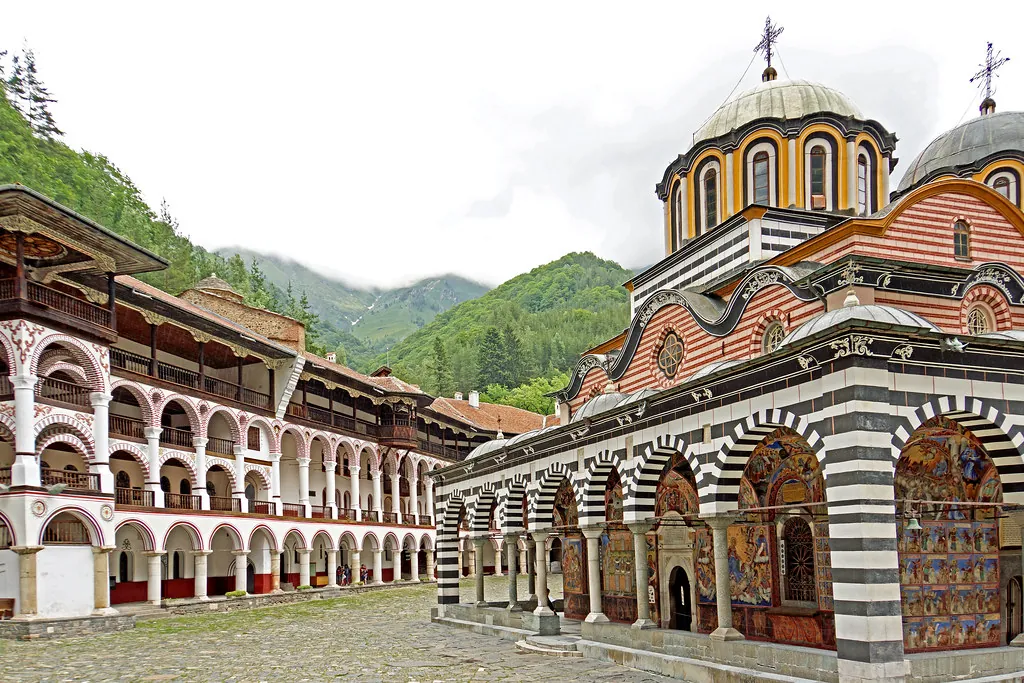
Positioned prominently at the centre of the courtyard stands the monastery’s main church, the Cathedral of the Nativity of the Virgin. Constructed between 1834 and 1837 by master builder Pavel Ivanovich, the cathedral replaced an older medieval chapel that was deemed too small for the growing number of pilgrims visiting the shrine.
The cathedral features five distinct domes, two side chapels, and an open outer portico (*exonarthex*) supported by marble columns with carved capitals. The structural design harmonizes traditional Byzantine layout with National Revival elegance. Light filters into the interior through high dome windows, illuminating gilt wood carvings and centuries of candle smoke residue that modern conservators continue to carefully clean. When planning your visit to see the church interior, remember to consult our guide on visitor rules and dress codes, as strict attire guidelines apply inside all sacred buildings.
Exterior Frescoes as a Visual Gospel for the Illiterate
The open portico of the Cathedral of the Nativity of the Virgin contains an unbelievable outdoor gallery of religious art. Painted between 1840 and 1848, these rila monastery frescoes served a deliberate educational purpose. In the 19th century, when literacy rates were low across rural Europe, church murals operated as a visual scripture (*Biblia Pauperum*). Pilgrims walking through the portico read theological teachings, moral lessons, and biblical history illustrated across every square inch of plaster.
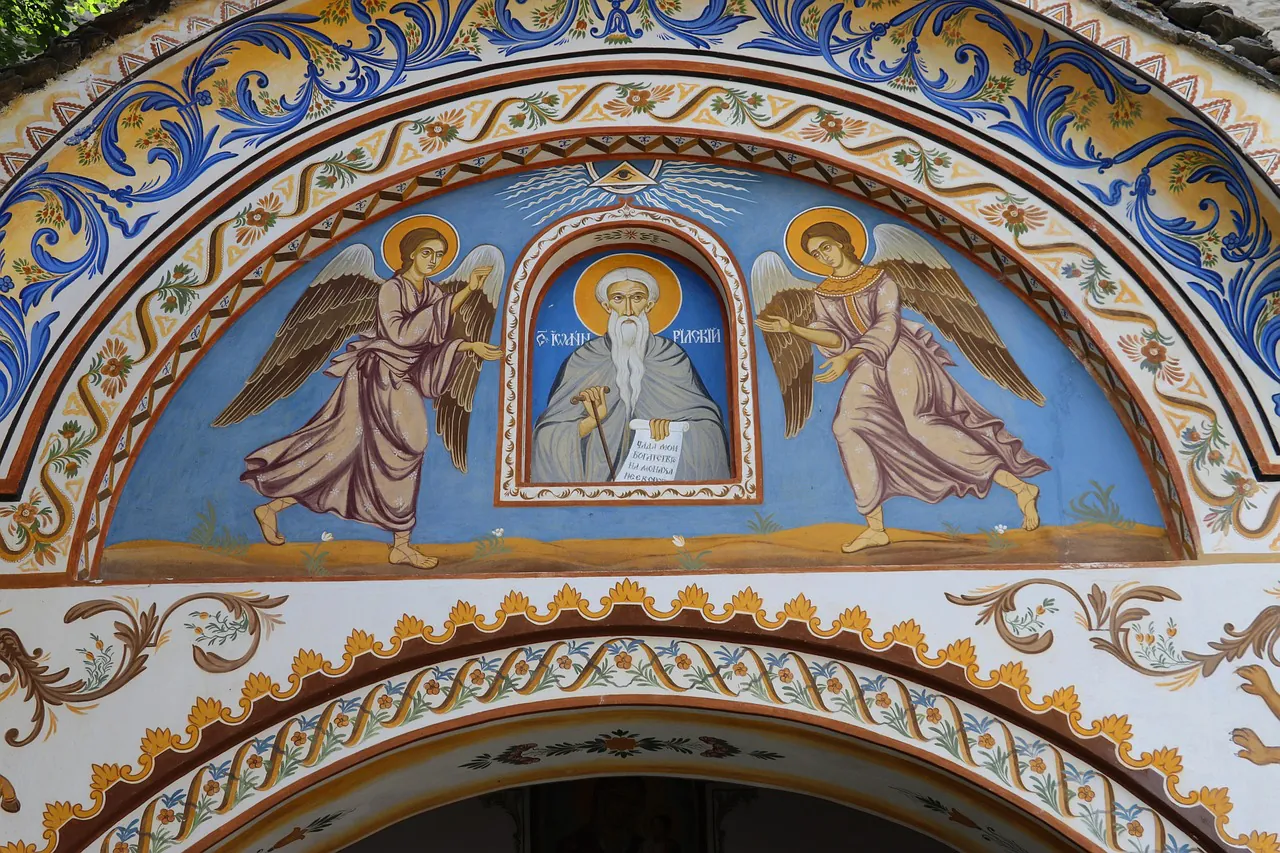
The murals cover walls, vaulted ceilings, archways, and window recesses in bright primary colours, using natural earth pigments mixed with egg tempera. The imagery transitions smoothly from Old Testament prophets along the outer columns to New Testament miracles and apocalyptic revelations closer to the main entrance doors.
Zahari Zograf and the Masters of the Brush
The painting of Rila Monastery brought together the finest iconographers of the Samokov and Bansko painting schools. Chief among them was Zahari Zograf (1810–1853), a visionary artist from Samokov who broke with strict medieval iconographic traditions by introducing human realism, emotional expression, and Bulgarian National Revival aesthetics into his work.
Zograf painted the most prominent wall spaces in the church portico between 1840 and 1844. Demonstrating remarkable confidence, he broke long-standing monastic precedent by painting his own self-portrait in a corner of the portico mural, alongside figures of local donors. Other master painters, including his brother Dimitar Zograf and artists from the Bansko school, contributed extensive frescoes inside the nave and chapel interiors, creating a unified artistic ensemble that remains unprecedented in Balkan art history.
The Last Judgement and Moral Imagery: Decoding the Demonic Details
Among the vast array of murals, the graphic depiction of *The Last Judgement* (*Strashniya Sud*) on the western wall of the portico commands immediate attention. Zograf and his contemporaries pulled no punches when illustrating the consequences of a sinful life. The composition presents Christ seated in glory at the top, while a fiery red river flows down toward the lower right corner where grotesque, multi-eyed demons haul souls off to damnation.
The moral warnings were tailored specifically to 19th-century society. Detailed scenes depict dishonest millers who cheated farmers with rigged scales, greedy moneylenders, village gossipers, corrupt judges, and sorcerers being tormented by terrifying blue and yellow monsters. These folk details offer fascinating historical insights into the social ethics and rural anxieties of the Bulgarian Revival era, rendering the frescoes both a sacred work and a cultural document.
Interior Sacred Art: The Gilded Iconostasis and Wonder-Working Icons
Stepping through the heavy oak portal into the central nave reveals an interior bathed in warm golden light from brass chandeliers and beeswax candles. The absolute masterpiece of the cathedral interior is the monumental, gold-plated wooden iconostasis (*ikonostas*). Measuring 10 metres high and 16 metres wide, it took four master woodcarvers from the Samokov guild over three years (1839–1842) to carve out of solid lime wood.
The carving features intricate relief work depicting grapevines, acanthus leaves, birds, beasts, and biblical scenes, covered entirely in thin gold leaf that catches candlelight. Set within this gilded frame are sacred icons, including the celebrated 14th-century icon of Saint Ivan of Rila and the wonder-working *Panagia Hodegetria* (Mother of God the Directress), surrounded by thirty-two reliquaries containing sacred relics of Christian saints. If you wish to explore more historical treasures inside the complex, such as the famous carved wooden Raphael’s Cross, be sure to visit the on-site history museum and mountain trails.
Preserving the Past: Restoration Work and Modern Stewardship
Maintaining a multi-century complex of wood, plaster, and stone in an alpine valley presents constant conservation challenges. Moisture from mountain humidity, freeze-thaw cycles in winter, and soot from millions of devotional candles require ongoing expert intervention. Professional art conservators from across Europe collaborate regularly with the Bulgarian Academy of Sciences to monitor, clean, and consolidate plaster layers and paint pigments.
Today, Rila Monastery remains an active brotherhood housing roughly 60 monks who balance daily liturgical life with welcoming over one million visitors every year. Official updates on monastic services and special feast day celebrations can be found on the Rila Monastery Official Site.
Connecting with the Sacred Landscape: Practical Takeaways for Your Visit
To fully appreciate the historical and artistic weight of Rila, give yourself plenty of time to explore without rushing. Many travelers zip through the courtyard in under an hour, but taking two to three hours allows you to study the detailed mural panels, step into the cool interior of Hrelyo’s Tower, and walk across teh cobbled courtyard as light shifts across the mountain peaks.
“The best way to experience Rila’s magic is to arrive around 8:30 AM before the tour buses pull in. Sit on a wooden bench in the upper gallery arcades, listen to the morning church bells echo off the granite cliffs, and watch the morning sun light up Zahari Zograf’s golden frescoes.” — Julian Thorne
Reaching the monastry from the capital is simple with proper planning. You can check daily bus schedules, private shuttle options, and self-drive routes in our detailed transportation guide from Sofia and Bansko. For travelers seeking a seamless journey that pairs historical commentary with comfortable transport, booking a Rila Monastery and Boyana Church full-day tour provides an ideal way to see two UNESCO treasures in a single day trip. Alternatively, if you prefer structuring your own timetable, check out our comprehensive Sofia to Rila day trip itinerary for realistic schedules and insider tips.
If you are planning an extended journey through the country, consider placing Rila Monastery at the heart of a broader route across the region, which we detail in our guide to Bulgaria’s most scenic destinations. However you choose to visit, stepping inside this sacred mountain stronghold remains an unforgettable encounter with Bulgarian culture, history, and spiritual endurance.