Rila Monastery: Bulgaria’s Sacred Sanctuary in the Sky
An immersive guide to history, fresco art, mountain solitude, and practical travel logistics written by a local expat.
Explore Guided Tours & Tickets →Rila Monastery and Boyana Church Full-Day Tour
7 Rila Lakes and Rila Monastery Tour
Rila Monastery and 7 Rila Lakes Self-Guided Shared Trip from Sofia
From Sofia Rila Monastery with Boyana Church or St. Ivan’s Cave
Rila Monastery & Thermae Full-Day Tour from Sofia
Rila Monastery Full Day Guided Tour
Stepping Into the Quiet Heart of the Rila Mountains
When I swapped the incessant rumble of London’s Victoria line for a quiet stone house on the foothills of southwestern Bulgaria, I thought I understood mountain isolation. Then I drove up the winding, emerald gorge of the Rilska River for the first time. Arriving at Rila Monastery (*Rilski manastir*) in the morning light is less like visiting a historical sight and more like stepping through a tear in the fabric of time.
Tucked away at 1,147 metres above sea level, surrounded by towering beech forests and snow-capped granite peaks, this fortress-monastery isn’t merely an architectural marvel. It is the living soul of a nation. For over a thousand years, through medieval golden ages, five centuries of Ottoman rule, and Communist secularism, this sacred cloister has held the pilot light of Bulgarian identity, art, and Eastern Orthodox faith.
The Spiritual and Historical Anchor of Bulgaria
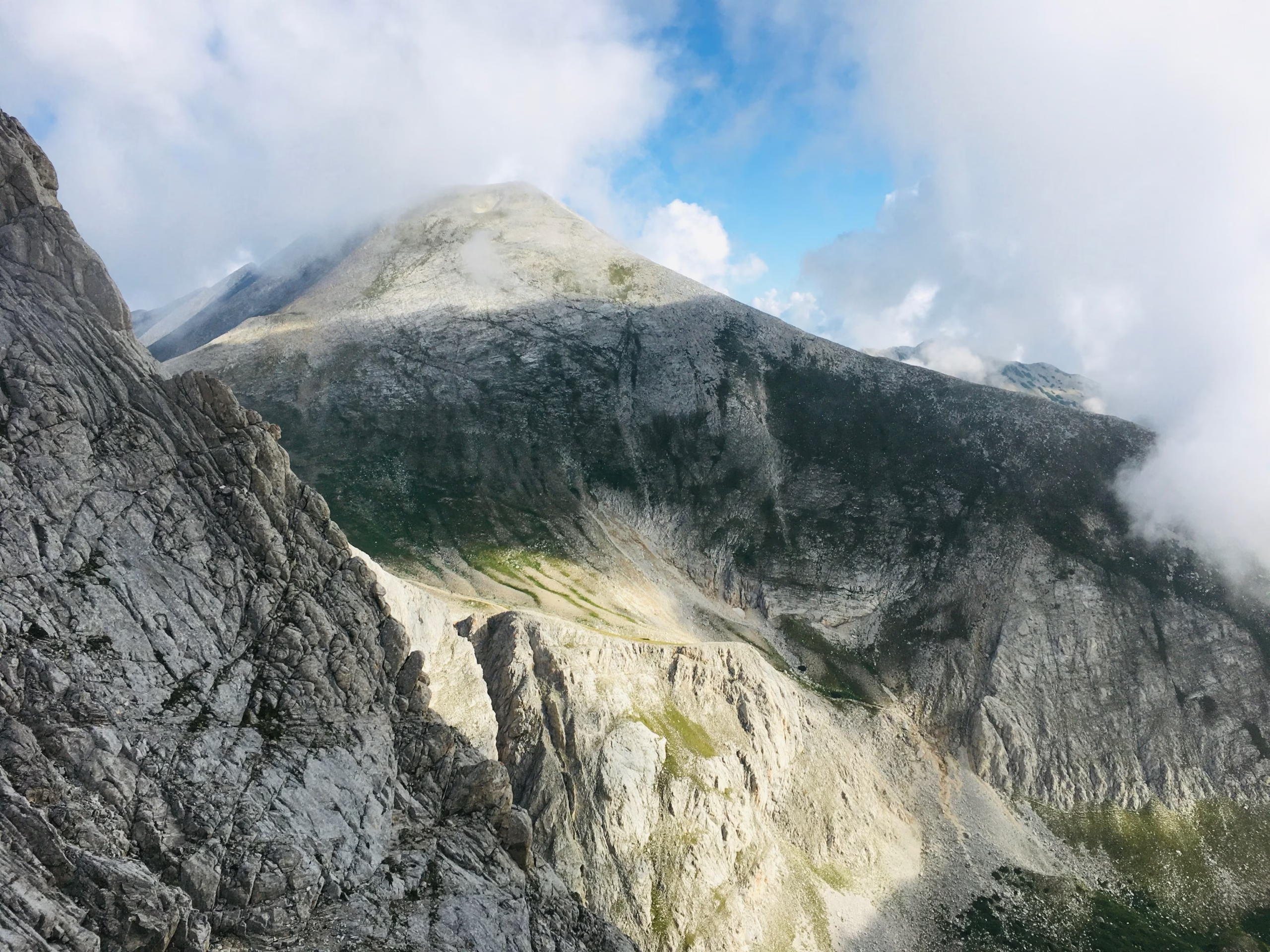
To understand why the monastery of Rila holds such overwhelming emotional resonance for Bulgarians, one must look back to the 10th century. A humble monk named Ivan (later canonized as Saint Ivan of Rila, or *Sveti Ivan Rilski*) retreated into the wilderness of the Rila range to abandon worldly possessions. He lived in a hollowed-out tree trunk and later a dark stone cave, praying in absolute solitude. His reputation for ascetic holiness grew so immensely that pilgrims, and eventually King Peter I himself, traveled into these treacherous cliffs seeking his blessing.
Saint Ivan’s disciples founded the original monastic complex near his cave. Though destroyed by avalanches and fires over centuries, the sanctuary kept re-emerging from its ashes. During the Ottoman era, when Bulgarian statehood ceased to exist, Rila operated as an autonomous spiritual sanctuary, preserving Old Church Slavonic manuscripts, traditional iconography, and religious freedom [1]. Today, the relics of Saint Ivan rest in a silver casket inside the main church, drawing worshippers who cross themselves before touching the sacred cloth covering his feet [2]. For a broader perspective on the country’s religious roots, read our guide on whether Bulgaria is more Catholic or Orthodox.
Architectural Splendour: Stripes, Arches, and Hrelyo’s Medieval Tower
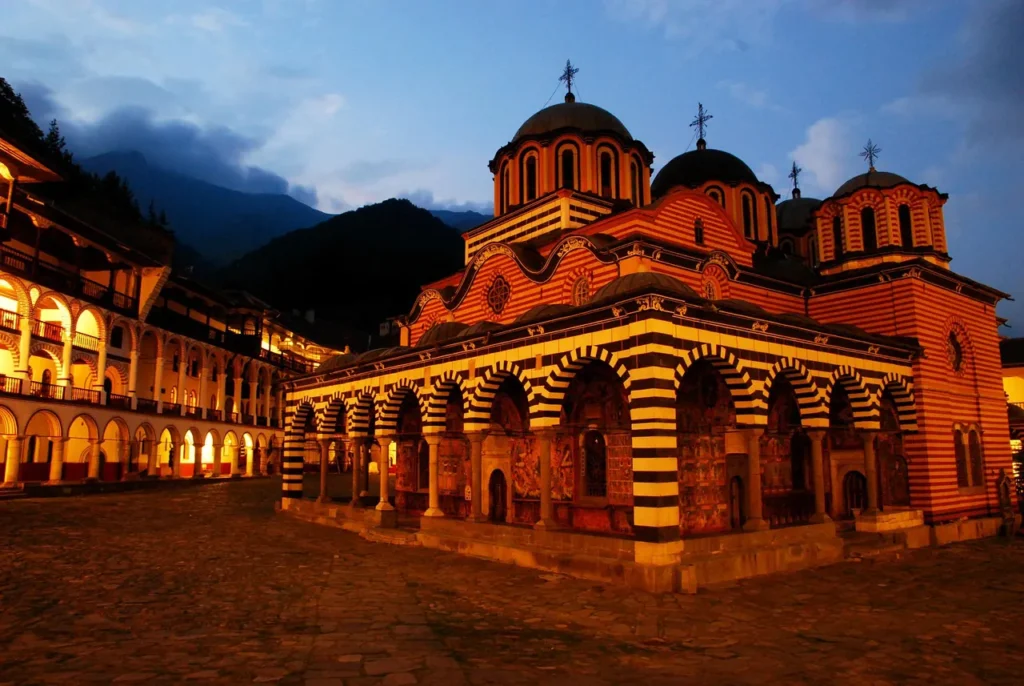
As you pass through the heavy wooden gates of the stone exterior—walls that rise 22 metres high like an impenetrable fortress—the interior courtyard bursts into a dramatic symphony of monochrome arches, carved wooden balconies, and vibrant red accents [3]. This masterwork of the Bulgarian National Revival period was constructed between 1834 and 1860 following a devastating fire, designed by the visionary master builder Alexi Rilski.
Standing tall in the center of the 8,800-square-metre cobblestone courtyard is Hrelyo’s Tower (*Hrelyova kula*). Erected in 1335 by the local feudal lord Protosebastos Hrelyo, this 23-metre medieval stone fortress tower is the oldest original structure surviving on site. It served as a refuge for monks during times of banditry and war. On its top floor lies a small chapel adorned with rare 14th-century murals, accessible to visitors during peak summer months via narrow, steep stone steps.
The Main Church & Zahari Zograf’s Frescoes
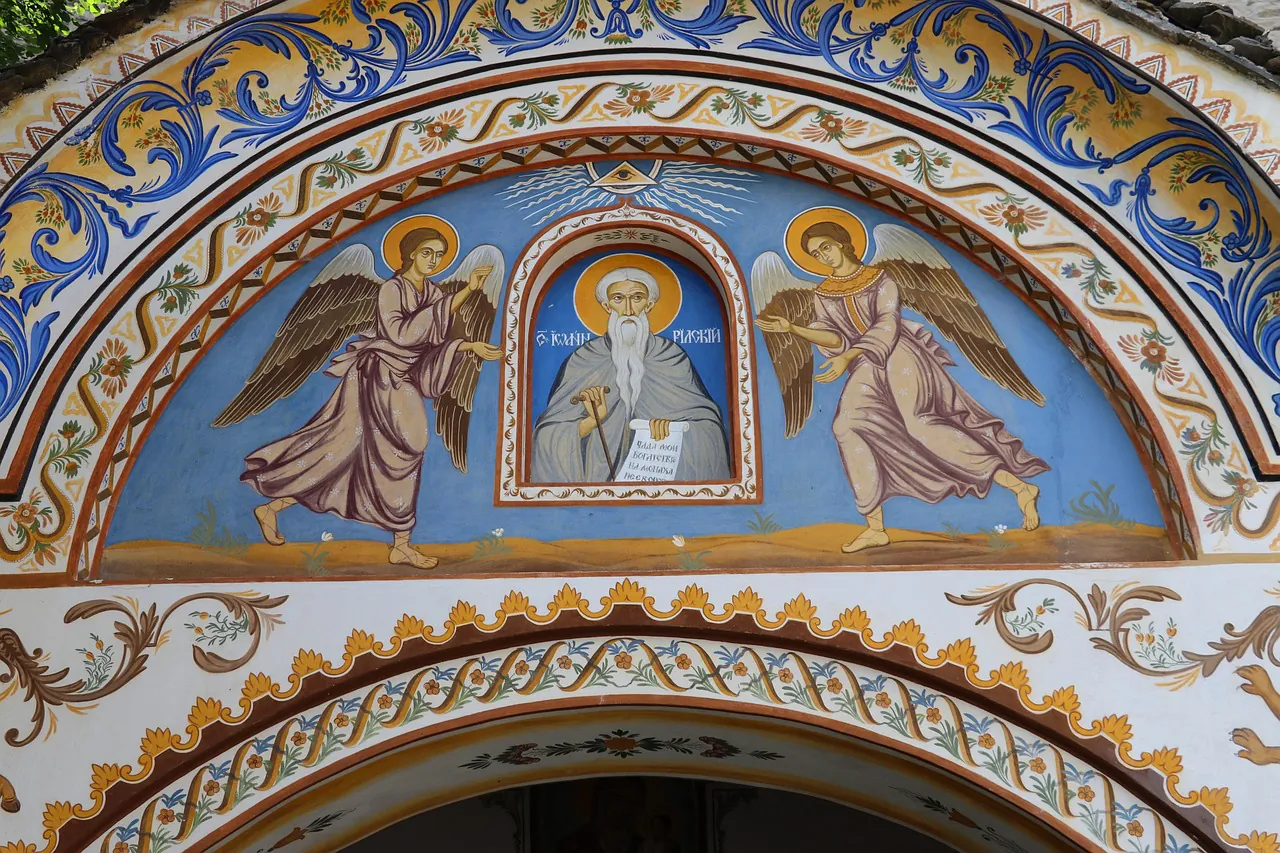
At the center of the complex sits the main church, the *Birth of the Virgin Mary Temple* (*Rozhdestvo Bogorodichno*). Constructed between 1834 and 1837, its open portico is lined with some of the most startling, vivid frescoes in Orthodox Christian history. Painted by master artist Zahari Zograf alongside other prominent painters from the Samokov and Bansko schools, these murals cover every square inch of wall and ceiling space.
Zograf’s depiction of the Last Judgment along the outer porch is famous for its terrifyingly imaginative depictions of sinners, demons, and worldly hypocrites being led into the jaws of hell. Inside the dimly lit church, beneath massive gold-leaf chandeliers, stands a hand-carved gilded iconostasis created by four master woodcarvers over three painstaking years. Photos are strictly prohibited inside the inner church out of respect for active worship, preserving an atmosphere of hushed, incense-scented reverence.
Must-See Highlights Within the Monastery Walls
Whether you have two hours or a full day, ensure you discover these key architectural and spiritual highlights within the cloister grounds:
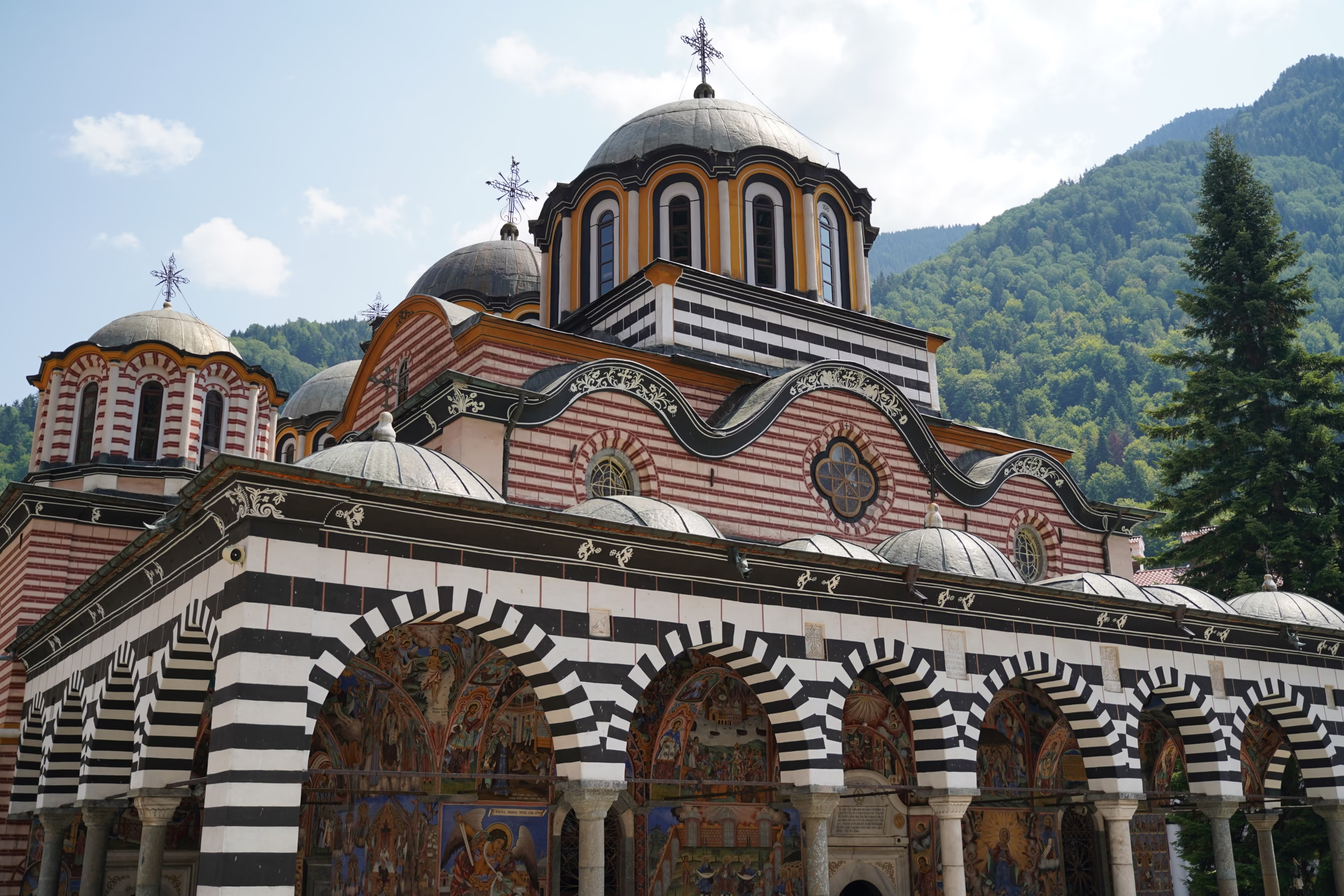
Birth of the Virgin Mary Temple
The central five-domed church housing the sacred relics of St. Ivan, a magnificent gold-leaf iconostasis, and breathtaking exterior frescoes.
Read History Guide →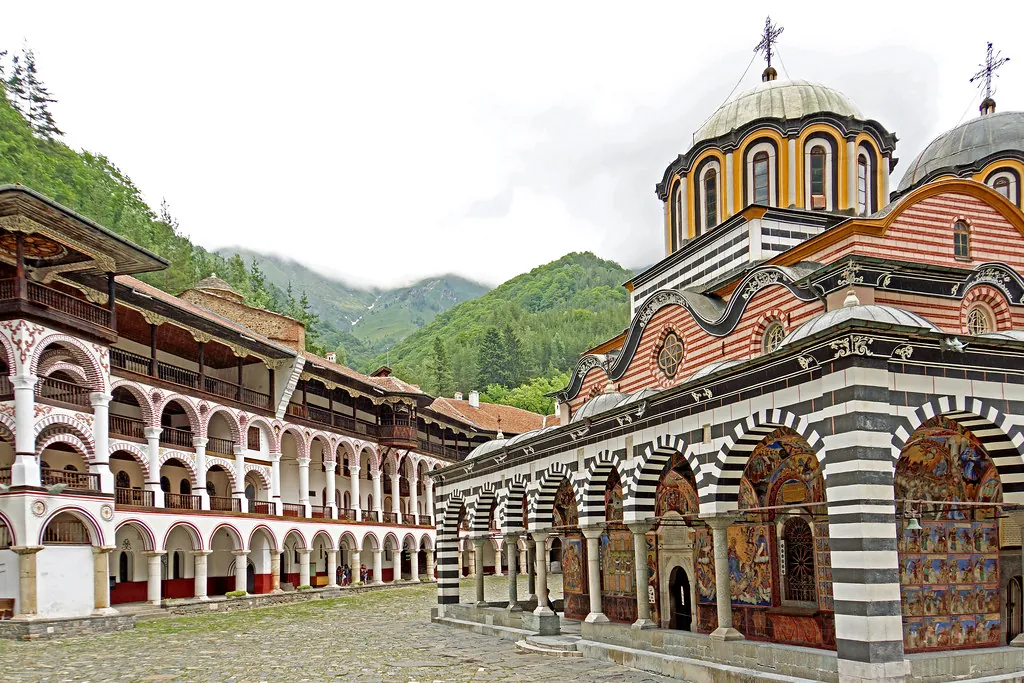
Hrelyo’s Medieval Tower
Built in 1335, this imposing 23-metre stone defense tower stood firm through centuries of invasions and fires, preserving medieval frescoes on its top floor.
Explore Architecture →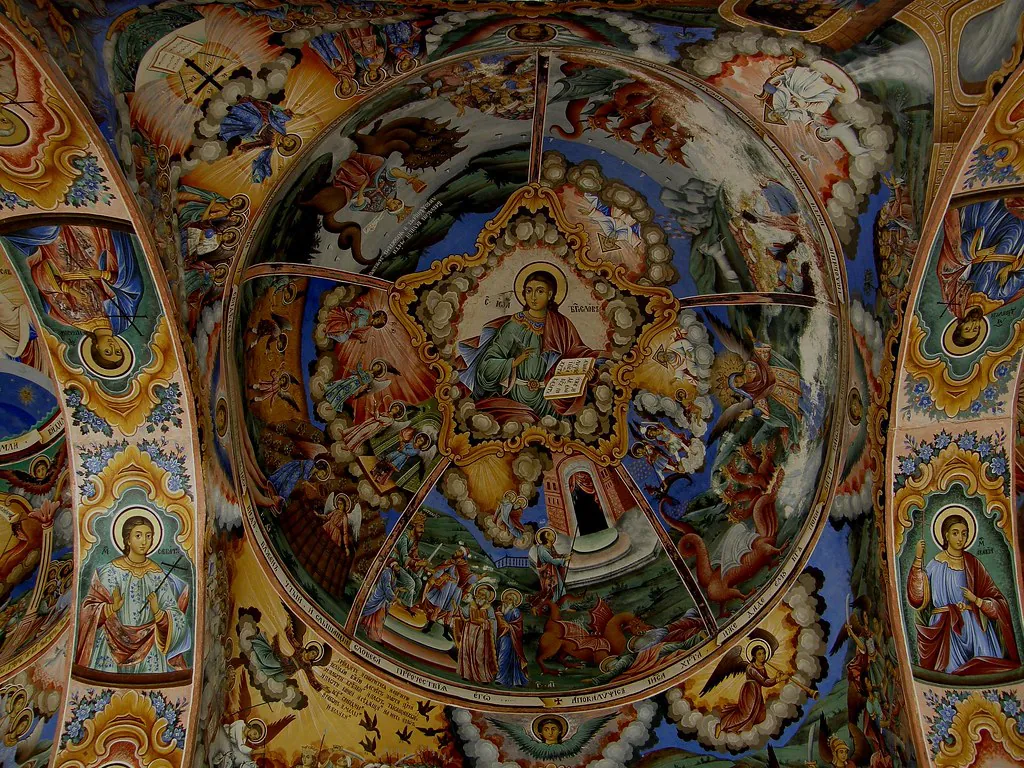
History Museum & Raphael’s Cross
Home to the world-famous Raphael’s Cross—a miniature wooden crucifix carved with 104 religious scenes and 650 micro figures over 12 years.
Discover Museum Highlights →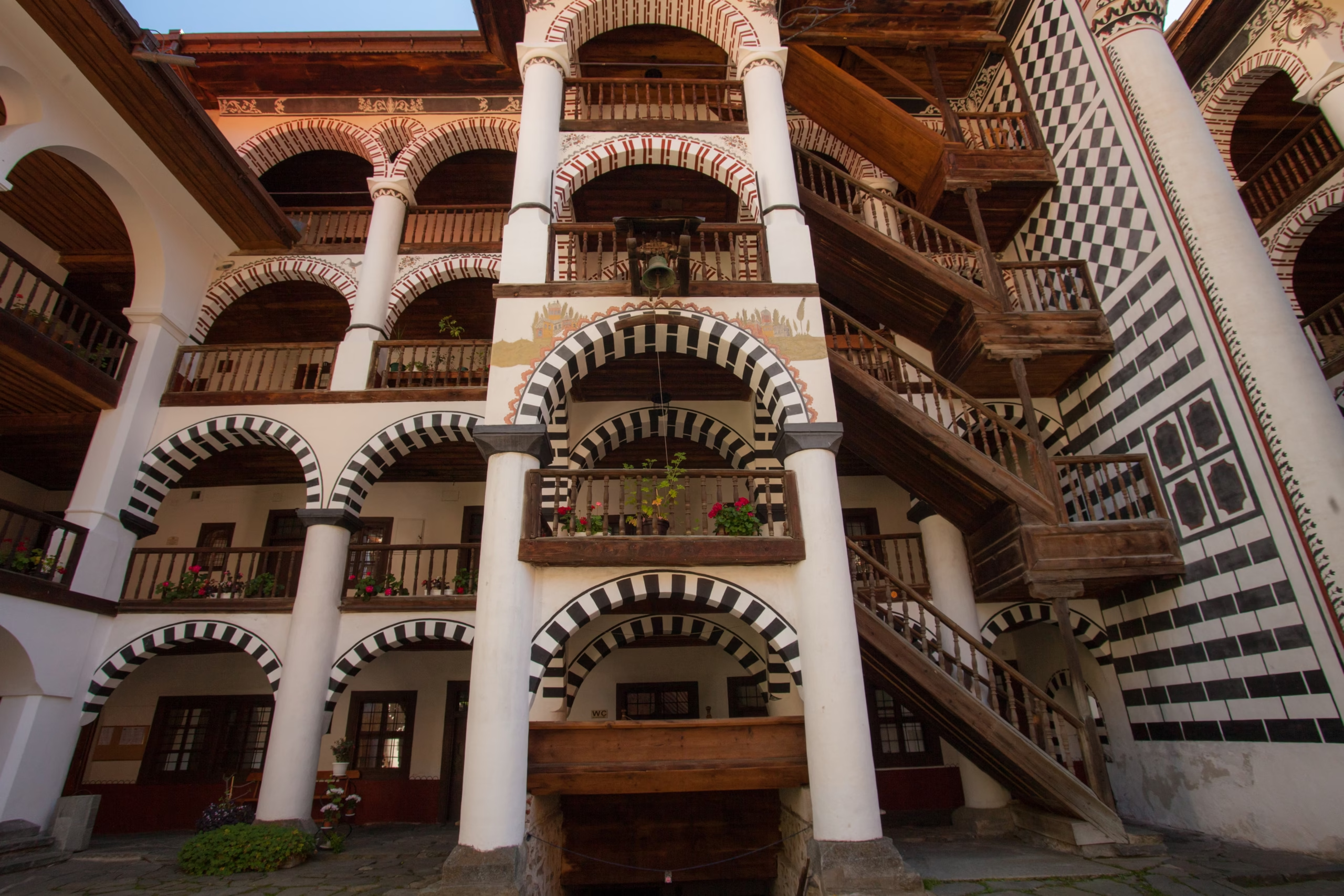
Monastic Courtyard & Cells
Featuring four levels of striped arches, wooden corridors, and 100 monk cells designed to house hundreds of resident brotherhood members.
View Visitor Guidelines →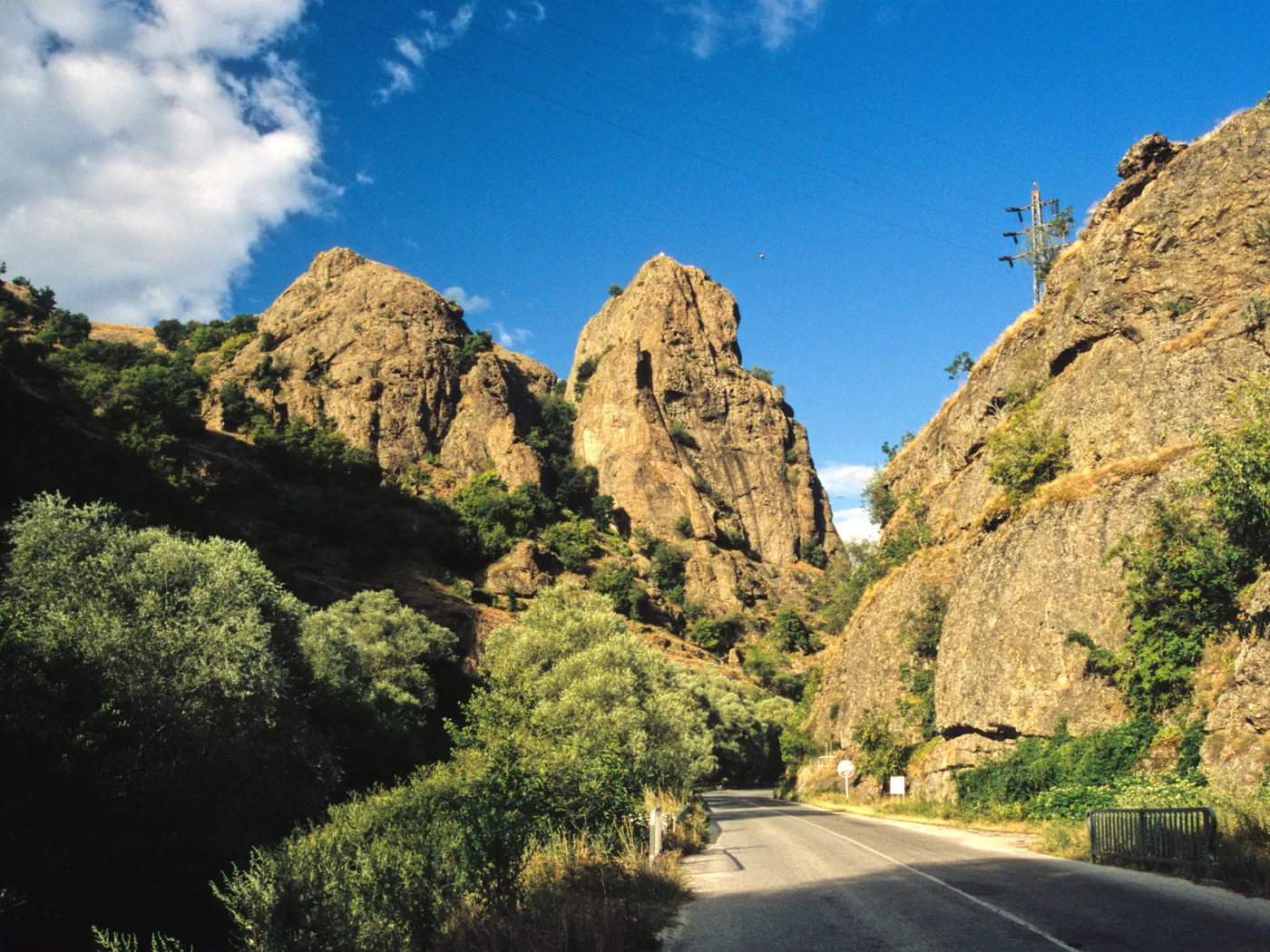
St. Ivan’s Sacred Cave
A peaceful 45-minute forest walk leads to the hermit’s original cave sanctuary and rock chimney. Tradition holds that climbing through cleanses sins.
Hiking Trails Guide →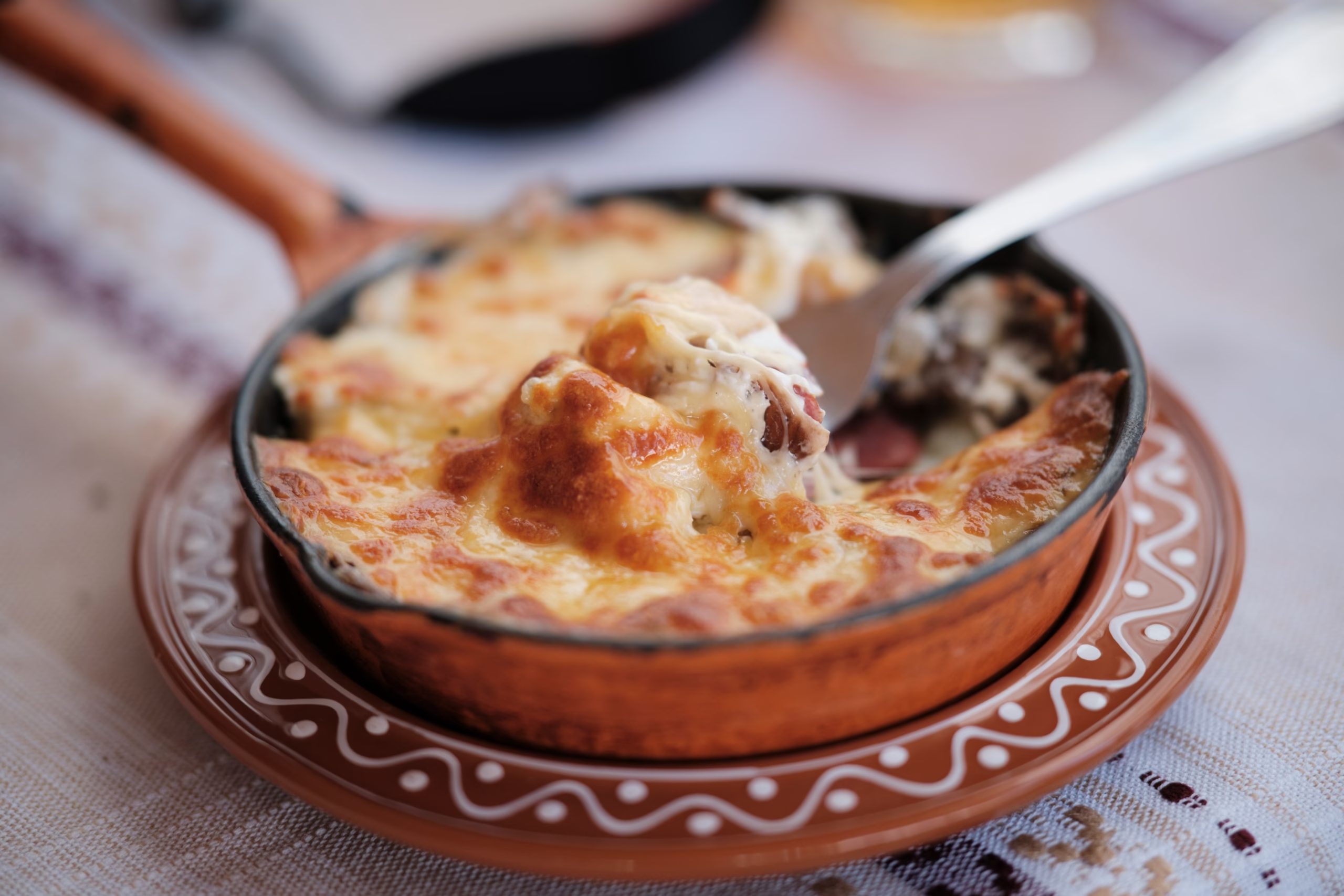
The Monastery Kitchen (*Magernitsa*)
A remarkable 22-metre-tall conical brick chimney system designed to cook vast iron cauldrons of soup for thousands of medieval pilgrims.
Learn More →Museums on Site: History, Craft, and Raphael’s Cross
While entering the main monastery courtyard and church is entirely free, visitors should purchase a ticket for the on-site Church History Museum. Inside lies one of Eastern Europe’s most incredible artistic achievements: Raphael’s Cross (*Rafelov krast*).
Carved out of a single piece of lime wood by a monk named Raphael between 1790 and 1802, this miniature cross measures just 81 by 43 centimetres. Using fine chisels and magnifying glasses, Brother Raphael meticulously sculpted 104 distinct biblical scenes and 650 miniature human figures. The effort was so intense that it cost the monk his eyesight upon its completion. The museum also displays royal charters (*chrysobulls*) signed by Bulgarian Tsars, ancient weapons, gold-embroidered vestments, and donated treasures from across Orthodox Europe [4]. Detailed ticket prices and tour details can be checked on our dedicated Tickets & Guided Tours page.
Strict Monastery Etiquette & Dress Code
Rila is an active holy monastery, not a public theme park. Monk brotherhood members reside here year-round, and strict etiquette is enforced at the gate entry:
- Dress Code: Shoulders and knees MUST be completely covered. Shorts, sleeveless tops, miniskirts, and deep necklines are prohibited. Wrap-around shawls are sometimes available at the entrance, but it is best to come properly dressed.
- Photography: Photography is permitted in the open courtyard, but strictly forbidden inside the main church and history museums. Drones are strictly banned across all nature park airspace without explicit monastic permission.
- Behavior: Silence should be observed inside sacred spaces. Eating, drinking alcohol, smoking, and wearing hats inside the church are strictly prohibited.
How to Get There: Transport Options from Sofia and Beyond
Located roughly 117 km south of Sofia, reaching bulgaria rila monastery requires a small amount of advance planning due to recent changes in public transit. Historically, a daily public bus departed from Sofia’s Ovcha Kupel station, but service has been irregular or non-operational in recent seasons [5]. Modern travellers generally choose between three reliable options:
- Organised Day Tours & Shuttles: Shared shuttles (starting around €25–€35 per person) depart daily from central Sofia near St. Alexander Nevsky Cathedral. Many tours combine Rila Monastery with the UNESCO-listed Boyana Church or the Seven Rila Lakes. Check options on our Sofia day trip guide.
- Rental Car: Driving from Sofia takes approximately 1.5 to 2 hours via the A3 Struma Highway, exiting at Kocherinovo onto Road 107. Modern asphalt runs directly to the monastery gate, where paid parking is available (approx 5 BGN/day).
- Private Taxi or Transfer: Ideal for families or small groups seeking a flexible schedule with direct hotel pick-up.
Popular Ways to Experience Rila
Select an activity cluster below to tailor your journey based on your personal travel style:
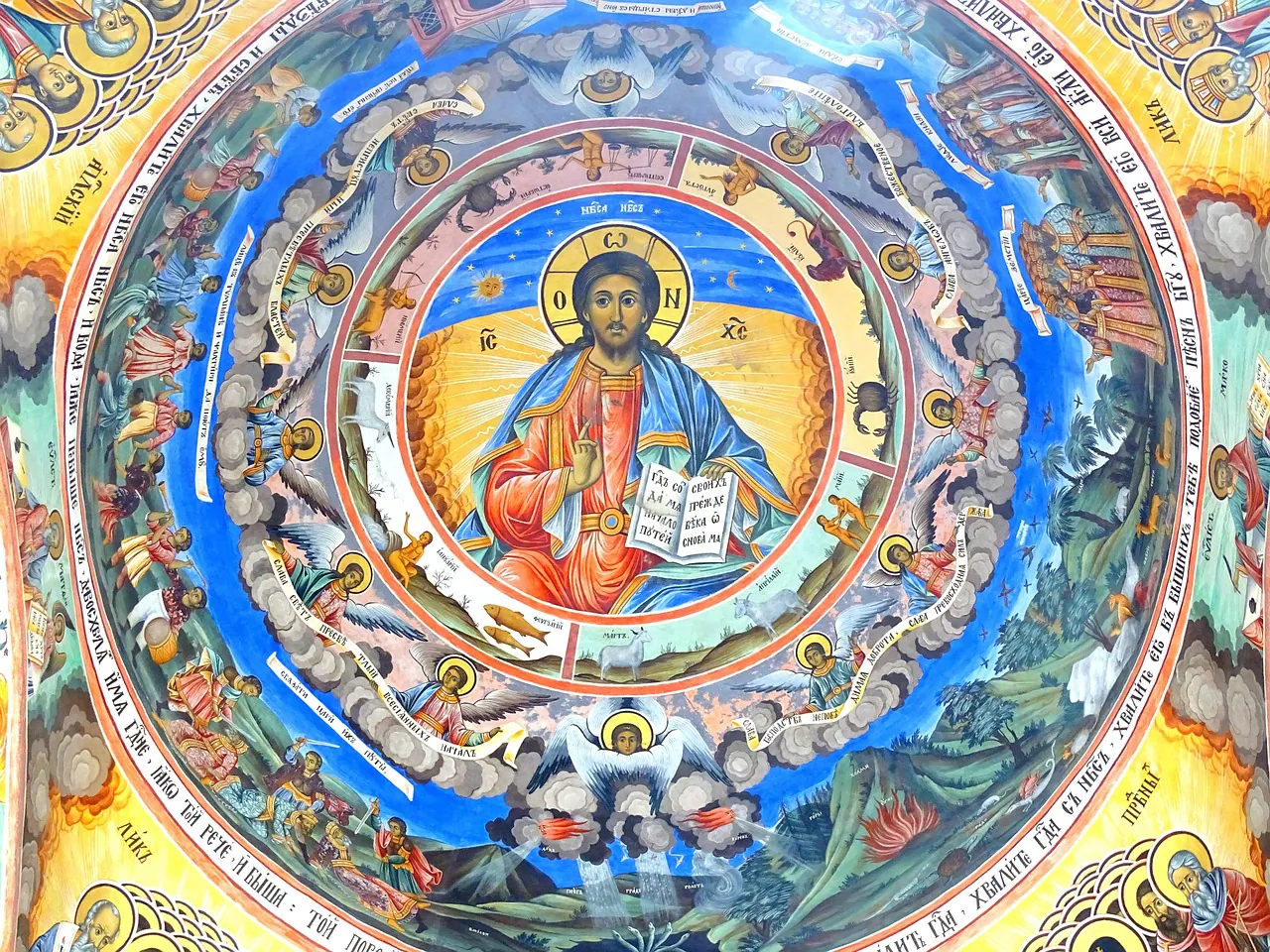
Day Trips from Sofia
Efficient, direct day tours combining monastery visits with Boyana Church, St. Ivan’s Cave, or nearby thermal hot springs in Sapareva Banya.
Plan Day Trip →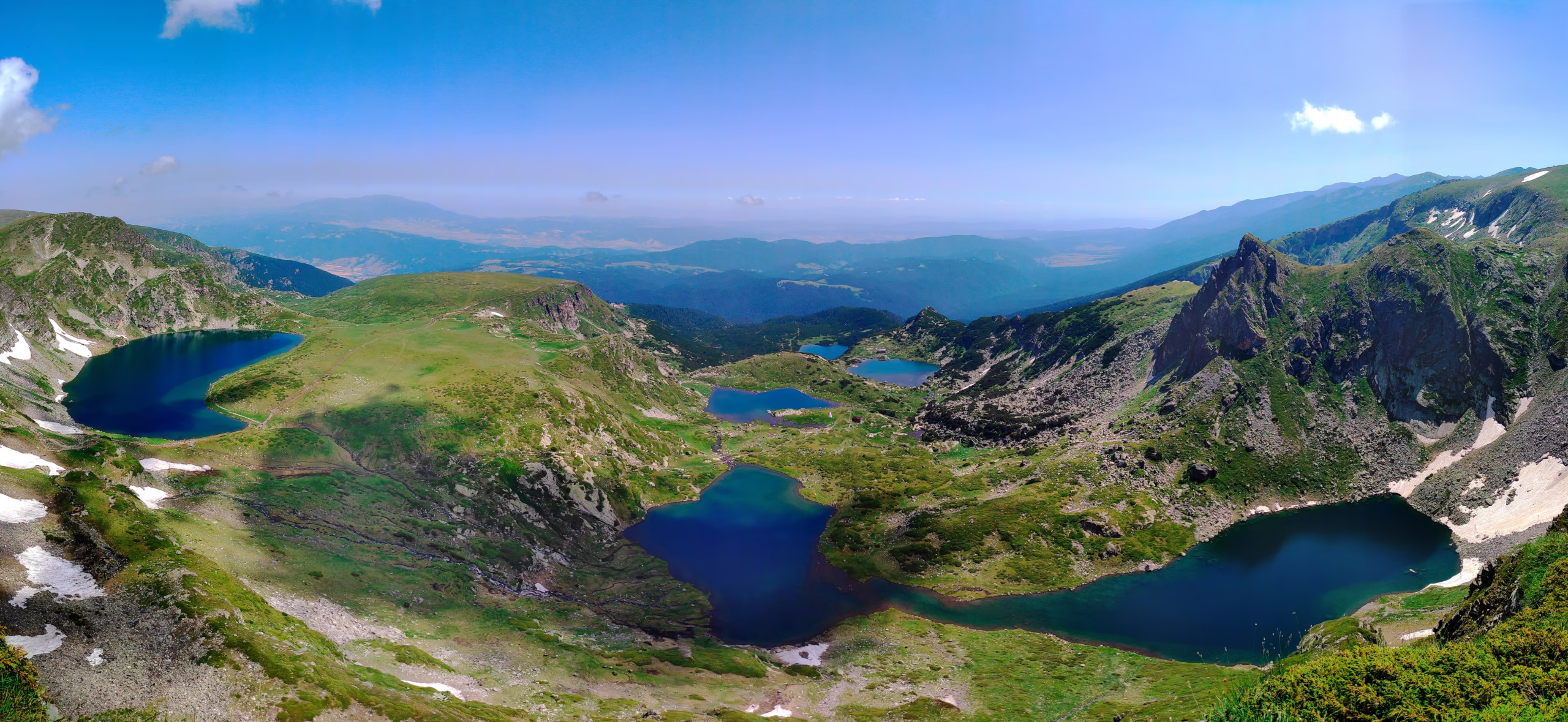
Seven Rila Lakes & Mountain Hikes
Combine spiritual heritage with high-altitude alpine hiking in Rila National Park, visiting glacial lakes and dramatic crests.
Explore Hiking Routes →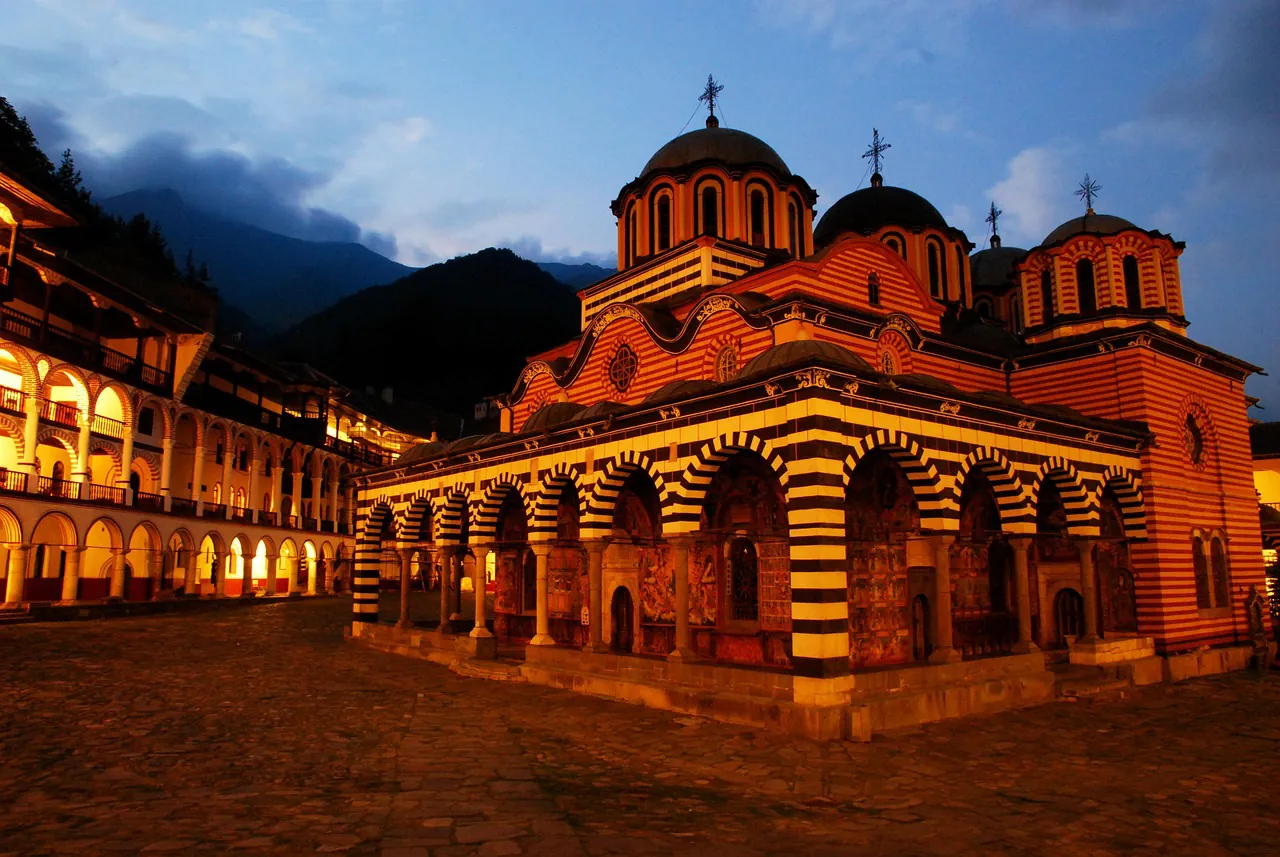
Overnight Monastic Stays
Experience profound tranquility by spending the night inside simple pilgrim guest rooms within the monastery walls after day-trippers depart.
Read Overnight Guide →Staying Overnight: Sleeping Within Monastic Walls
For travellers seeking a spiritual connection or unmatchable photography conditions at sunrise, sleeping inside Rila Monastery is a unqiue experience. The monastic brotherhood maintains simple pilgrim guest rooms (*gostopriemnitza*) featuring basic wooden beds, clean linens, and private or shared bathroom facilities.
There are no luxury amenities, televisions, or Wi-Fi inside the cells. Instead, you are treated to absolute silence once the heavy monastery gates lock at dusk. You can awaken at dawn to the chime of monastic bells echoeing across the empty courtyard. Rooms are booked directly through the monastery’s administration desk upon arrival or via telephone inquiry. For full lodging etiquette, visit our Visitor Guidelines page.
Beyond the Walls: Hiking Trails & Rila Valley Nature
The monastery sits at the heart of Rila Nature Park, a protected sanctuary of ancient pine forests, rare brown bears, and glacial river valleys. Beyond visiting the main courtyard, take time to explore nearby nature trails:
- Trail to St. Ivan’s Cave: A gentle 45-minute forest walk starting 4 km upriver from the monastery. It leads to the hermit’s cave, the holy spring (*agiasmo*), and the stone chapel built around his tomb.
- Malyovitsa Peak Trail: For experienced mountain trekkers, trailheads lead up toward Malyovitsa valley, a cradle of Bulgarian mountaineering and rock climbing.
- Mlekarna & Local Food: Stop by the small wooden bakery (*mlekarna*) behind the monastery’s rear gate to try authentic *mekitsi* (fried dough dusted with powdered sugar) paired with fresh mountain sheep’s yogurt.
To discover more unbelievable destinations across the country, explore our guide to the most beautiful places in Bulgaria.
Location & Interactive Map
Rila Monastery is located in the Kyustendil District of southwestern Bulgaria, nestled deep in the Rilska River valley.
Conclusion: Why Rila Monastery Remains Bulgaria’s Crown Jewel
No trip to the Balkan peninsula is complete without standing in the vast, arcaded courtyard of the monastery of rila as mist clings to the pine-clad peaks above. It is a place where history, art, nature, and living faith coalesce into something profoundly moving. Whether you come to marvel at Zahari Zograf’s frescoes, hike to Saint Ivan’s hermit cave, or simply sit quietly with a hot coffee listening to the mountain stream, Rila offers an unforgettable travel sanctuary.
References & External Authorities:
- UNESCO World Heritage Centre — Official inscription details for Rila Monastery (1983).
- Bulgarian Ministry of Tourism — Cultural heritage sites and regional travel data.
- National Archaeological Institute with Museum — Historical archives on National Revival architecture.