Is Bulgaria More Catholic or Orthodox? Understanding Local Faith
Is Bulgaria More Catholic or Orthodox? Understanding Local Faith
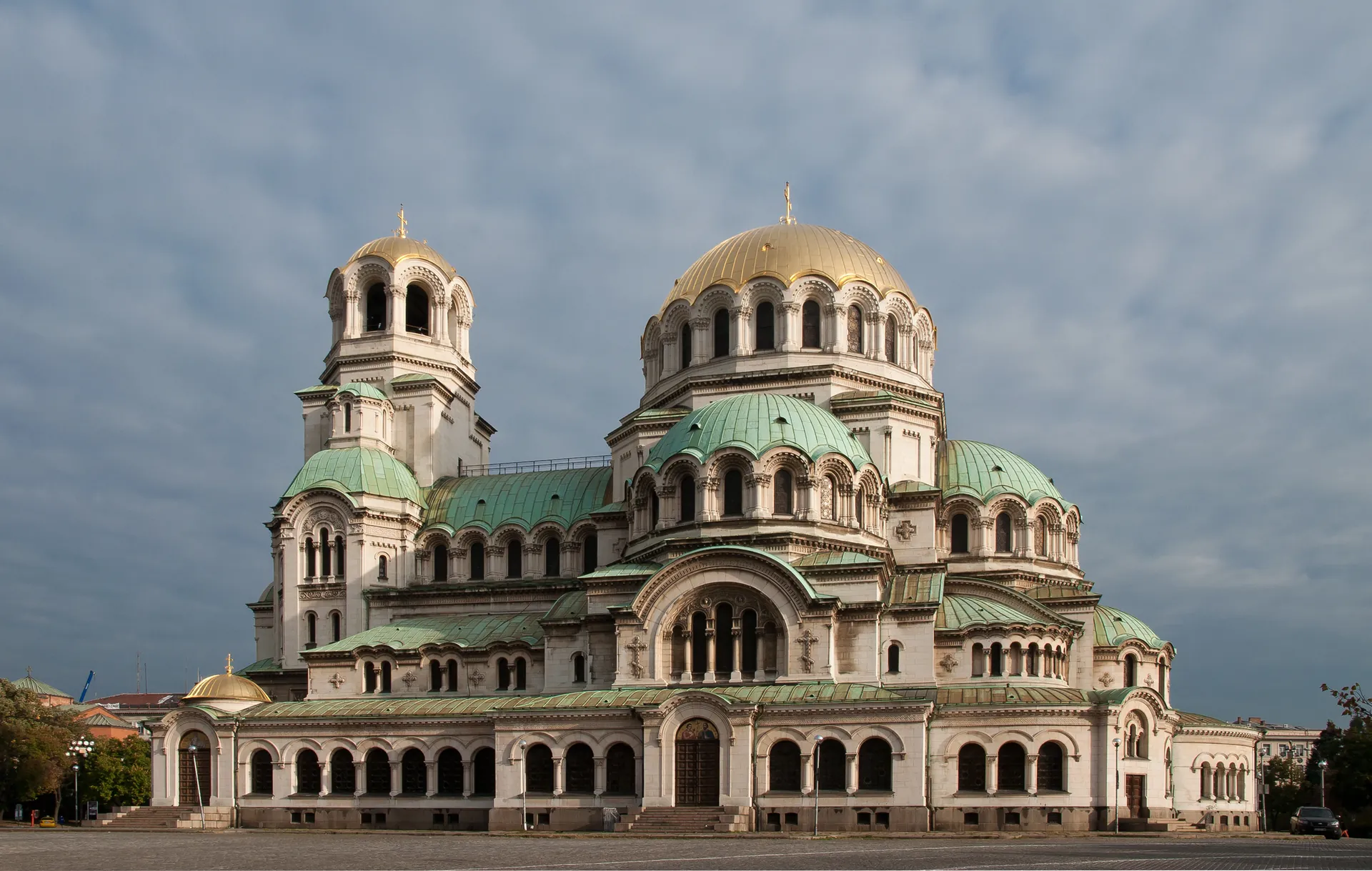
When I first moved from London to Sofia, my morning coffee ritual involved sitting outside a small café facing the golden copper domes of Alexander Nevsky Cathedral. Watching locals walk past, I noticed how many people would stop, turn toward the church, make the sign of the cross three times from right to left, and continue on their way. That simple gesture answered a question that often confuses first-time visitors: is bulgaria more catholic or orthodox? Bulgaria is overwhelmingly Eastern Orthodox, a nation where faith and history have bound together over twelve centuries.
According to demographic studies published by the Pew Research Center, Eastern Orthodoxy dominates the spiritual identity of the country. Roman Catholicism exists here too, but as a small minority group tucked away in specific regional pockets. Understanding this religious balance is essential if you want to make sense of Bulgarian culture, architecture, and daily life. It explains why grand Orthodox cathedrals dominate city centers, why remote mountain valleys harbour ancient sanctuaries, and why a visit to Rila Monastery feels less like standard sightseeing and more like entering the soul of the nation.
Demographics and Historical Foundations
Official census figures gathered by the National Statistical Institute reveal that roughly 71.5 percent of the total population identifies as Eastern Orthodox Christian. Among those who claim a specific Christian identity, the vast majority belong to the Bulgarian Orthodox Church. The roots of this faith reach back to 864 AD, when Prince Boris I adopted Christianity as the state religion. By choosing Eastern Orthodoxy from Constantinople rather than Roman Catholicism from Rome, Boris secured an independent church hierarchy and authorized the use of the Old Church Slavonic language, shaping the cultural trajectory of the entire Slavic world.
In contrast, Roman Catholics and Byzantine-Rite Catholics account for roughly 0.7 percent of the national population, numbering around 40,000 citizens. Most of these communities live in the Thracian plain around the city of Plovdiv, particularly in towns like Rakovski, as well as northern Danubian settlements such as Belene. These Catholic enclaves developed during the 16th and 17th centuries through Franciscan missionary work among former Bogomil heretics. While small, these parishes remain active today, maintaining distinct cultural traditions alongside their Orthodox neighbors.
Secular Tradition and Living Belief
Four decades of state-sponsored atheism during the Communist regime altered how locals practice their religion. Modern surveys rank Bulgaria among the less religiously observant Orthodox nations in Europe regarding weekly church attendance. Many Bulgarians rarely attend Sunday liturgy, yet they retain a deep respect for Orthodox rituals. Lighting thin yellow beeswax candles (sveshti) for living family members or deceased relatives remains a routine act during life transitions, personal crises, or major holidays like Easter (Velikden).
Orthodox faith in Bulgaria operates primarily as an anchor for national identity rather than strict theological practice. Namedays (imen den) often carry greater celebration than individual birthdays, honoring the specific Orthodox saint whose name a person bears. The country’s constitution explicitly names Eastern Orthodoxy as the traditional religion of the Republic of Bulgaria. This constitutional status reflects how the church preserved the Bulgarian language, literature, and legal memory during five centuries of Ottoman rule.
To understand Bulgarian Orthodoxy, you must look beyond empty pews on a regular Sunday. Faith here lives inside family tradition, nameday feasts, and mountain sanctuaries that guarded the nation’s language through centuries of hardship.
The Spiritual Heart of the Nation
Travelers wandering through the country often ask: what is the most famous monastery in Bulgaria? The answer is unquestionably the Monastery of Saint Ivan of Rila, known locally as Rilski manastir. Tucked away in a deep valley of the southwestern Rila Mountains at an elevation of 1,147 metres above sea level, this sanctuary was founded in the 10th century by Saint Ivan of Rila (Sveti Ivan Rilski). The hermit monk lived in a nearby stone cave, rejecting worldly wealth and attracting followers who built a monastic community around his spiritual teachings. Recognized as a UNESCO World Heritage Site, Rila Monastery stands as the ultimate spiritual pillar of the nation.
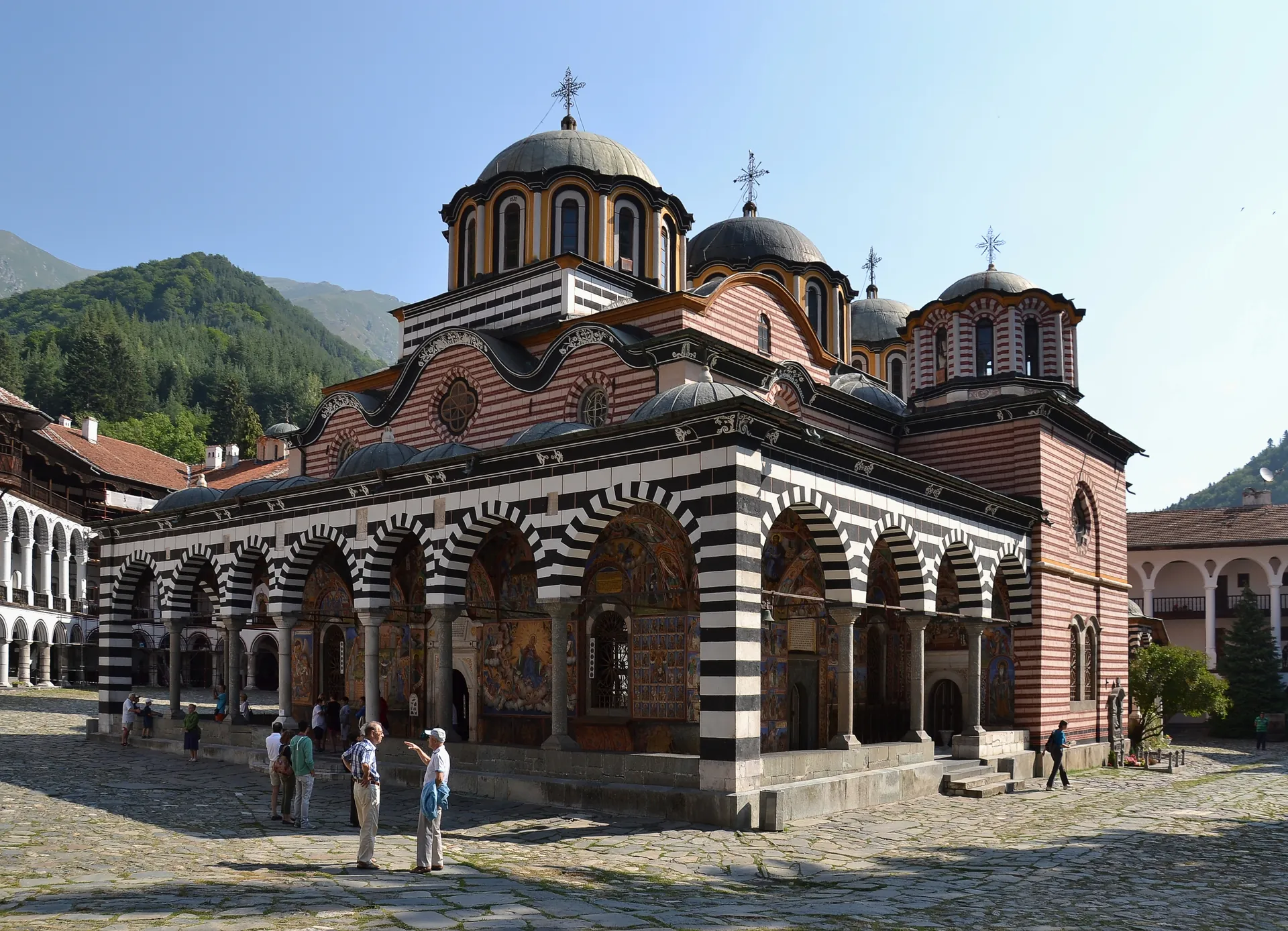
Although fire destroyed most of the original complex in the early 19th century, the site was rebuilt between 1834 and 1862 during the Bulgarian National Revival. The central courtyard features striped arcades, carved wooden balconies, and bright exterior frescoes painted by Zahari Zograf and other master artists. The oldest surviving structure inside the inner courtyard is Hrelja’s Tower (Hrelyova kula), a heavy stone defense tower constructed between 1334 and 1335. If you plan to explore the inner courtyard, you can review tickets and tour arrangements or check our complete Sofia transport guide. You can also read about the complex history and frescoes before your trip.
Practical Etiquette for Visiting Orthodox Sanctuaries
Visiting an active Orthodox monastry requires basic understanding of religious etiquette. When you step through teh massive iron-studded Dupnitsa Gate into Rila’s central courtyard, remember that you are entering a living sanctuary where roughly 60 monks maintain daily prayer services. Dress code rules are strictly enforced at the main church entrances: shoulders and knees must be fully covered for all visitors, and hats must be removed inside. You can review our comprehensive visitor rules and guidelines before arriving.
Inside the main church, you will hear the low hum of chanting and smell burning frankincense, creating a spiritual atmosphere that visitors immediately respond to. If you wish to light a candle, purchase one from the small counter near the entrance. The higher candles are lit for the living, while the lower sand trays hold candles for those who have passed away. Take time to admire the wonder-working icon of the Virgin Mary (Sveta Bogoroditsa Osenovitsa), surrounded by relics of thirty-two Christian saints.
After taking in the sanctuary inside the monastery walls, step out through the rear Samokov Gate to sample fresh, hot mekitsi (traditional fried dough pastries served with powdered sugar) from the small bakery tucked away by the river. If you have extra time, follow the marked walking trail through the pine forest up to the cave where Saint Ivan lived, or explore nearby trails detailed in our museums and hiking guide. Travelers interested in natural landmarks across the country can connect this trip with our guide to the most beautiful places in Bulgaria or plan a full day trip from Sofia. Understanding this deep Orthodox legacy transforms a simple holiday into a proper journey through Bulgaria’s enduring cultural spirit.