Discovering the Most Beautiful Places in Bulgaria Beyond Sofia
Living in Sofia for the past five years has given me a deep appreciation for urban Balkan life, but my favorite mornings always start long before the capital wakes up. I sit on my balcony with a thick cup of dzhezve coffee, watching the dawn light hit Vitosha Mountain, knowing that the true heart of this country lies well beyond the city limits. Most visitors arrive in Bulgaria, spend two days walking cobblestone avenues, and wonder what is the most beautiful place in Bulgaria without ever leaving the Sofia ring road. If you ask locals where the soul of the nation lives, they will point you south toward the granite peaks and thick forests where ancient monastic walls sit shrouded in mountain fog.
The Rila Mountains Anchor: Why Rila Monastery Sets the Tone
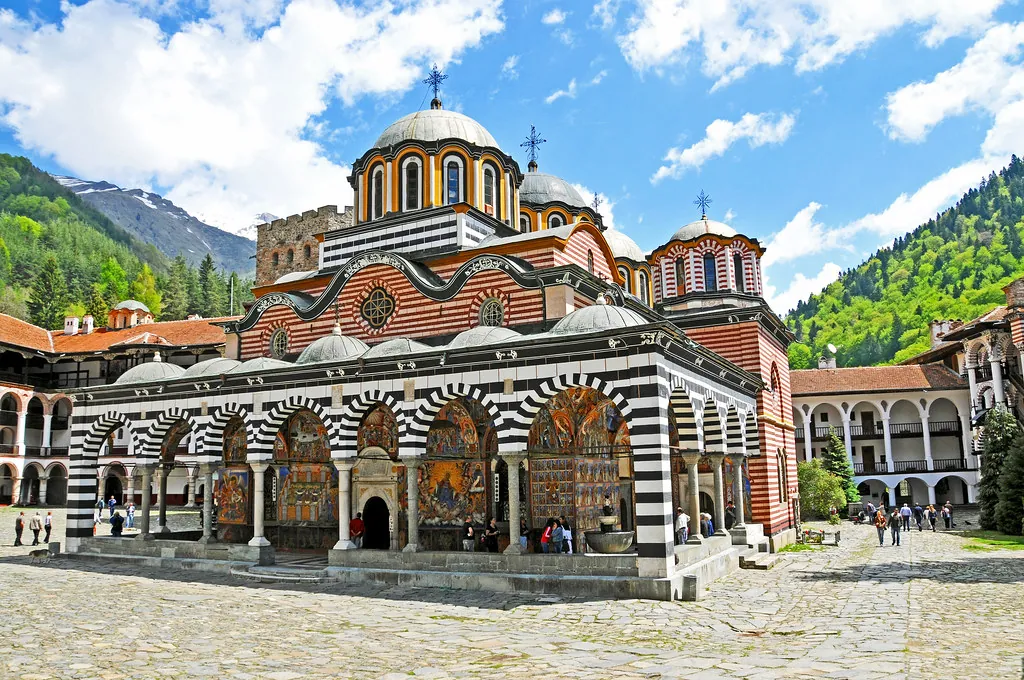
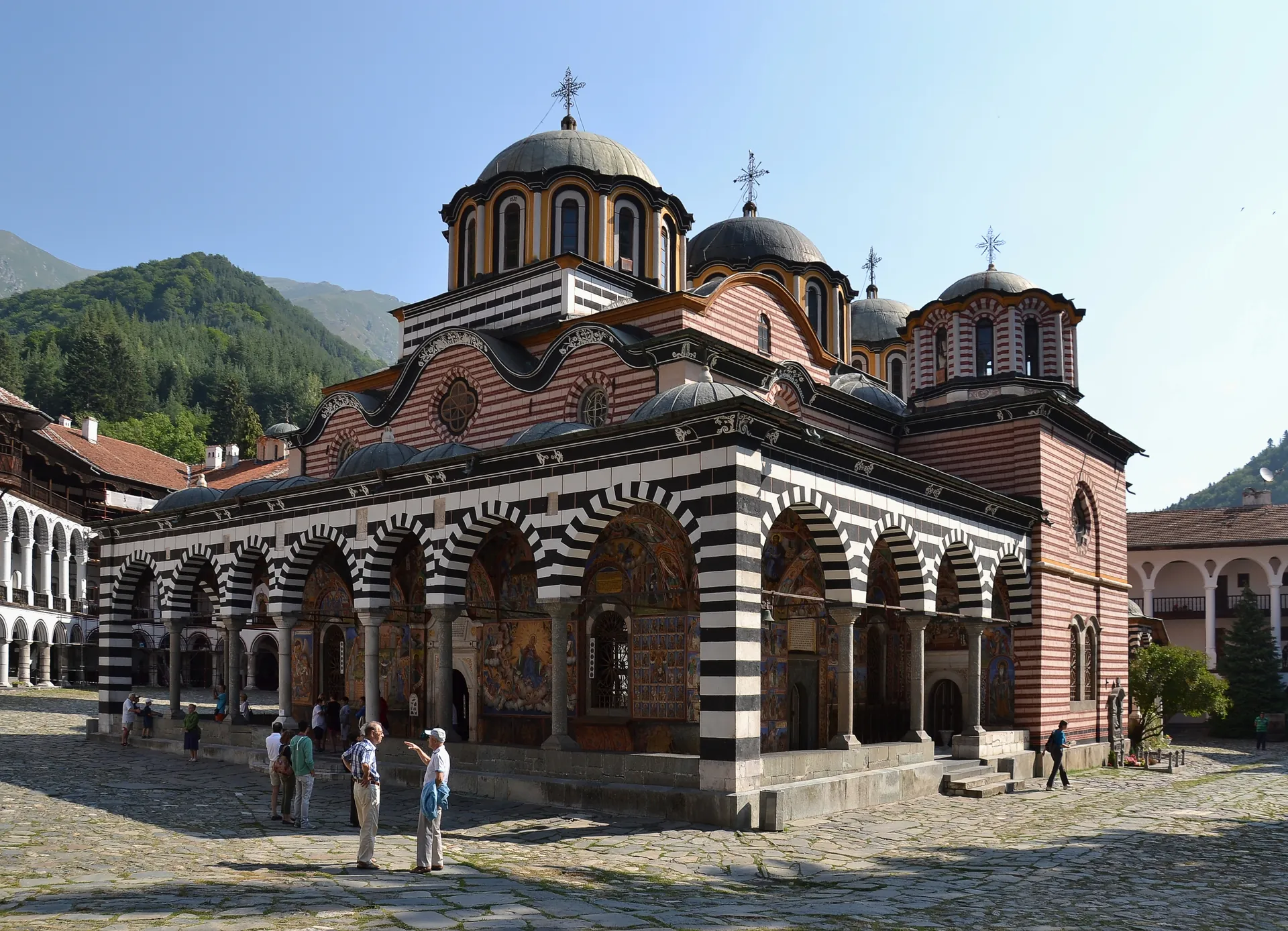
Standing in the central courtyard of Rila Monastery at seven in the morning is a spiritual experience regardless of your personal beliefs. Surrounded by the towering pine slopes of the rila monastery rila mountains bulgaria valley, the black-and-white striped arches and golden frescoes strike a dramatic pose against the jagged mountain backdrop. Founded in the 10th century by Saint Ivan of Rila, the sanctuary has served as the guardian of Bulgarian language, Orthodox tradition, and art through centuries of foreign rule.
My first journey here came after a stressful move from London, and the absolute quiet of the forest hit me like a physical wave. Walking beneath the outer galleries painted by Zahari Zograf, you can examine vivid depictions of angels and demons before stepping into the main church where incense drifts through the shadowy nave. You can read more about the spiritual legacy in our breakdown on Bulgaria’s Orthodox heritage, or explore the architectural details in our guide to Rila’s history and frescoes. If you are planning a trip from Sofia, our Sofia day trip guide covers every practical detail you need to know about.
“Arrive at the monastery grounds before 9:00 AM. The tour buses from Sofia usually land around mid-morning, so those early hours offer an undisturbed atmosphere where you only hear the mountain stream and monastic bells.”
Underground Masterpieces: Prohodna Cave and the “Eyes of God”
Heading north into Lovech Province near Karlukovo Village, the landscape shifts from dramatic pine peaks to rolling karst plateau. Here lies Prohodna Cave, one of the most accessible natural marvels in the country. The cave is famous for its 262-meter-long natural rock bridge and an cavernous vault reaching 45 meters high. What draws visitors from across the globe are the two identical, symmetrical openings in the ceiling known across Bulgaria as Ochite na Boga, or the “Eyes of God.”
Standing directly beneath these massive almond-shaped skylights as daylight pours through creates an uncanny impression of being watched from above. During rainstorms, water streams down the stone walls beneath the openings, making it look as though the eyes are shedding giant tear drops. The site is equally popular with rock climbers and bungee jumpers who throw themselves from the massive cave entrance, contrasting modern thrill-seeking with ancient geological formations.
Karst Wonders and Hollywood Silences: Devetashka Cave
Further east near Devetaki village, Devetashka Cave reveals a completely different subterranean environment. Extending over 2,400 meters in total length, this colossal cavern opens up into a central chamber covering 15,000 square meters. Seven massive ceiling openings filter soft green light down onto lush vegetation growing directly inside the cave hall, creating a subterranean forest environment unlike anywhere else in the Balkans.
Human settlement here dates back to the Paleolithic era, but in recent years the site achieved international fame when Hollywood selected it as a major filming location for The Expendables 2. Beyond film sets, Devetashka remains an ecological sanctuary of international importance, sheltering over 30,000 bats across dozens of protected species. To protect roosting cycles, broad sections of the inner cave system close to visitors during spring and summer breeding periods, preserving the natural balance of this ancient habitat. You can cross-reference visitor advisories on the official Bulgarian Ministry of Tourism portal before planning your drive.
Deep Underground in the Rhodopes: Uhlovitsa Cave
Traveling south into the dense pine forests of the Rhodope Mountains near Mogilitsa village leads to Uhlovitsa Cave, one of the oldest geological treasures in the region. Formed over 3.5 million years ago, this subterranean underworld sits high on a mountain slope, requiring visitors to climb 280 steep metal steps along a cliffside path just to reach the mouth of the cavern.
Inside, a constant year-round temperature of 10 to 11°C chills the air as you navigate 330 meters of developed walkways. The cave is celebrated for its exquisite corallite formations, where mineral dendrites branch out across stone surfaces like white ocean coral. At the terminus of the visitor route, a snow-white limestone waterfall descends into four clear rimstone pools, illuminated by soft gallery lighting that reveals delicate mineral layers built over millions of years.
Myth and Echoes: Tracing Orpheus at Devil’s Throat Cave
Deep within the towering limestone walls of Trigrad Gorge, Devil’s Throat Cave (*Dyavolskoto Garlo*) carries a darker, mythological reputation. Unlike traditional caves filled with delicate stalactites, this site is a massive roaring abyss carved by an underground river. The river plunges 42 meters through the roof of the main cavern, forming the highest underground waterfall in the Balkan Peninsula within a hall so vast it could easily fit a cathedral inside.
Local folklore firmly ties this dark subterranean cavern to the Thracian legend of Orpheus, who was said to have descended into the underworld right here to rescue his beloved Eurydice. The acoustic power of the roaring waterfall in the main hall creates a soundscape that makes speech almost impossible. Visitors exit the cave by climbing a near-vertical staircase of 301 damp stone steps alongside the cascading water, emerging into the bright sunshine of Trigrad Gorge feeling as though they have returned from the underworld themselves.
Rare Formations and Hidden Levels: Yagodinska Cave
Just a short drive through the narrow canyon from Trigrad lies Yagodinska Cave, one of the longest and most complex cave systems in Bulgaria. Stretching across three distinct levels for more than ten kilometers, the cave features a lit 1.2-kilometer path for guided walking tours. The interior is famous among speleologists for its vast collection of rare formations, including twisted helictites, delicate cave curtains, and polished cave pearls formed inside tiny gravel basins over centuries.
The lower level of Yagodinska holds ancient human history, where archeologists uncovered Neolithic dwellings complete with ceramic kilns and hand tools dating back thousands of years. The cool climate inside contrast starkly with the warm mountain air outside during summer, making a proper jacket essential even in July.
Cliffside Devotion: Basarbovo Rock Monastery
In the northern plains near Ruse, along the winding banks of the Rusenski Lom River, cliffside architecture takes on a sacred form at Basarbovo Rock Monastery. Carved directly into steep limestone cliffs, this site remains the only active rock-hewn monastery in Bulgaria where Orthodox monks still live and practice their daily devotions.
The sanctuary gained prominence in the 17th century thanks to Saint Dimitar Basarbovski, who lived his entire monastic life in these stone niches. Visitors climb 48 stone steps cut into the rock face to reach the cliff chapel, where a hand-carved wooden iconostasis sits beneath rock overhangs. Down in the courtyard, a stone well dug by Saint Dimitar is maintained by locals who consider its cold spring water to hold healing properties. For details on monastic conduct and proper attire across sacred sites, review our Visitor Rules and Guidelines.
High Mountain Panoramas and Sacred Art: Rozhen Monastery
Tucked away near the southwestern tip of the country near Melnik, Rozhen Monastery offers panoramic views across the Pirin and Ograzhden mountain ranges. First mentioned in 13th-century manuscripts, this medieval complex features wooden galleries, grapevines shading the central stone courtyard, and rare 16th-century frescoes preserved within the Church of the Nativity of the Virgin.
Unlike larger monastic sites, Rozhen maintains an intimate, rustic atmosphere where the scent of aging timber and mountain pine fills the corridors. The monastery houses the miraculous icon of the Mother of God Portaitissa, which draws pilgrims from across the Balkans every autumn. A short hike along the sandy trail behind the monastery leads directly to breathtaking viewpoints overlooking the famous Melnik Earth Pyramids.
Ancient Mosaics and Imperial Opulence: Villa Armira
In the far southeastern corner near Ivaylovgrad, Villa Armira presents an unparalleled glimpse into Roman imperial wealth. Discovered during industrial excavations in the late 20th century, this 1st-century AD noble villa is widely regarded as one of the most magnificent Roman residences found in the Balkan region.
The villa features extensive floor mosaics executed in sharp black and white marble tesserae, depicting mythical figures, geometric motifs, and portraits of the original aristocrats who owned the estate. High-ranking Roman provincial governors spared no expense, lining walls with white marble paneling shipped from ancient Mediterranean quarries. Ongoing restoration efforts documented by the Bulgarian News Agency continue to uncover pristine archaeological artifacts from the surrounding garden grounds.
Revival Architecture and Wooden Streets: Zheravna
Deep in the eastern Balkan Mountains, Zheravna Architectural Reserve feels completely suspended in the 18th century. Over 200 authentic wooden houses built during the Bulgarian National Revival period stand along narrow, cobblestone alleyways, featuring heavy stone roofs, broad open verandas, and intricate hand-carved oak ceilings.
Walking through Zheravna in the quiet late afternoon, you hear only the sound of wood smoke from kitchen chimneys and the gentle murmur of mountain streams running down stone channels. Many of the historical timber homes now operate as small guesthouses, offering travelers a chance to sample home-cooked regional meals cooked in traditional clay vessels.
Sandstone and Small-Town Wine: The Melnik Earth Pyramids
At the foot of the Pirin Mountains sits Melnik, officially recognized as the smallest town in Bulgaria. Surrounding its cobblestone main street are the famous Melnik Earth Pyramids, striking sandstone formations reaching heights up to 100 meters, shaped over centuries by rain, wind, and frost erosion into jagged spires, natural towers, and steep canyons.
The town is equally famous for its centuries-old winemaking heritage, specializing in the Broad-Leaved Melnik Vine, an ancient grape variety grown exclusively in this sun-drenched valley. Local vintners age their dark, full-bodied red wines in deep subterranean cellars dug directly into the soft sandstone cliffs behind their historic merchant homes.
Top Regional Spots Comparison
| Destination | Region | Type | Key Feature | Distance from Sofia |
|---|---|---|---|---|
| Rila Monastery | Rila Mountains | Monastery / UNESCO | Iconic frescoes and mountain peaks | 117 km |
| Prohodna Cave | Lovech Province | Karst Cave | “Eyes of God” ceiling openings | 115 km |
| Devetashka Cave | Lovech Province | Karst Cave | Massive ceiling skylights & bat habitat | 170 km |
| Uhlovitsa Cave | Rhodope Mountains | Cave | Corallite formations & white waterfall | 250 km |
| Devil’s Throat | Trigrad Gorge | Cave / Waterfall | 42m underground waterfall drop | 210 km |
| Yagodinska Cave | Trigrad Valley | Cave System | Cave pearls & helictite formations | 220 km |
| Basarbovo Monastery | Ruse Province | Rock Monastery | Active cliffside monastic complex | 310 km |
| Villa Armira | Ivaylovgrad | Roman Archeology | 1st-century AD Roman mosaics | 300 km |
| Zheravna | Balkan Mountains | Architectural Reserve | 200+ Revival wooden houses | 330 km |
| Melnik Pyramids | Pirin Mountain Region | Geological Formation | Sandstone spires & wine cellars | 180 km |
Highlights Around the Region
Mountain Traditions
The high mountain settlements surrounding Rila and Pirin retain agricultural customs that have vanished from Western Europe. Shepherds still drive flocks up high alpine meadows during summer months, and local taverns (mehana) serve rustic mountain cheeses and slow-cooked stews served in unglazed ceramic bowls.
Subterranean World
Bulgaria harbors over 4,500 surveyed caves across its limestone karst landscapes. From the roaring underground rivers of Trigrad Gorge to the sunlit ceiling eyes of Lovech, the underworld offers an incredible variety of geological phenomena within easy driving distance of historic towns.
Designing Your Itinerary and Getting Around
Exploring Bulgaria’s provincial attractions requires thoughtful transit logistics. While Sofia features reliable metro and bus connectivity, reaching isolated mountain monasteries or karst cave systems is best accomplished by renting a car or booking organized day excursions. Roads through high mountain passes like Trigrad Gorge can be extremely narrow, requiring patient driving and clear weather checks.
If you prefer to leave the driving to professionals while exploring the region around the rila monastery rila mountains bulgaria, guided day tours from Sofia provide comfortable transit and historical context. You can explore available itineraries, transport options, and tickets through our guided portal below.
Rila Monastery and Boyana Church Full-Day Tour
7 Rila Lakes and Rila Monastery Tour
Rila Monastery and 7 Rila Lakes Self-Guided Shared Trip from Sofia
The Seven Rila Lakes & Rila Monastery
From Sofia Rila Monastery with Boyana Church or St. Ivan’s Cave
From Sofia: Rila Monastery and Plovdiv Day Trip
For additional details on regional routes, public transit links, and driving tips, read our comprehensive guide on Transportation Options to Rila. You can also explore secondary hiking trails and museum exhibits near the monastery grounds on our Attractions & Trails Guide, or look through our main Tickets & Guided Tours Page to secure your travel arrangements in advance.